


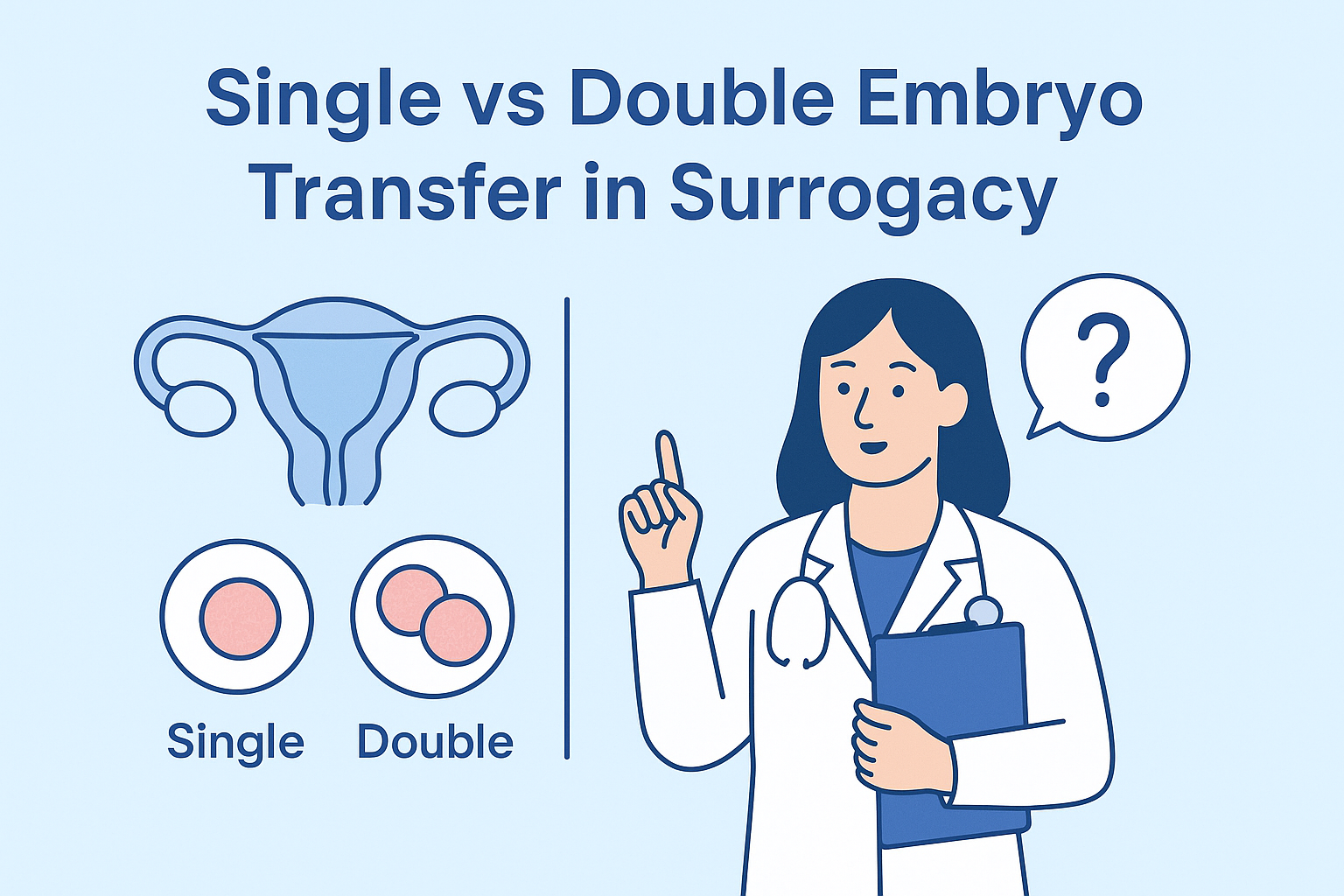
When it’s time to transfer embryos to a surrogate, intended parents often face a key decision: should we transfer one embryo or two?
Intended parents choosing embryo transfer through SILK Medical in Tbilisi often ask this question. Especially when they are hoping to maximize their chances or aim for twins. But the answer isn’t always simple. It depends on embryo quality, your program type, and how comfortable you are with the potential outcomes.
Why Single Embryo Transfer Is Often the Safer Choice
In most modern IVF practices, especially when embryos have been genetically tested (PGT-A), transferring one embryo is the default. A single high-quality, euploid embryo offers strong chances of pregnancy with fewer risks to the surrogate and baby.
This practice reflects global medical consensus. Twin pregnancies carry higher chances of complications: preterm birth, low birth weight, gestational diabetes, and emergency C-sections. These risks apply even in healthy, well-monitored surrogacy cases.
For this reason, when a top-grade, day-5 embryo is available, many embryologists will recommend transferring just one.
When Intended Parents Hope for Twins
Some couples ask for two embryos to be transferred, hoping for twins. It’s understandable. For those planning only one surrogacy cycle, a twin pregnancy can feel like a way to complete their family at once. It also avoids the cost and logistics of starting a second program later.
But the actual chance of twins after a double embryo transfer is lower than many expect, at around 25 – 30%. That means most two-embryo transfers still result in a single baby, or in some cases, no pregnancy at all.
Even when twins do result, clinics must manage the pregnancy more closely. Surrogates may require relocation earlier, carry stricter activity restrictions, and deliver by C-section in a hospital equipped for NICU support.
Twin Pregnancy: Medical Trade-Offs
Compared to singletons, twin pregnancies are more likely to end before 37 weeks and carry greater risk for NICU admission. In surrogacy, this means a longer stay in Georgia, possible neonatal care expenses, and higher costs if your program doesn’t already include coverage for these outcomes.
SILK Medical doesn’t prohibit twin transfers, but we handle them cautiously. Double embryo transfers require your doctor’s approval and written consent acknowledging potential complications. In some packages, a multiple pregnancy fee applies. In others, it’s already included.
What Embryos Are You Working With?
Embryo quality and quantity often play a bigger role in the decision than patient preference alone.
- If you have a single euploid embryo from PGT-A, doctors will nearly always recommend a single transfer. The implantation rate is high, and twin risk is minimal.
- If you have two lower-grade embryos, untested or borderline quality, transferring both may make sense, especially if no further embryos are expected.
- If your only embryos are Day 3 (rather than Day 5 or 6), or show signs of abnormal development, you’ll need a case-by-case discussion.
Our embryology team works closely with your doctor to propose a transfer plan. It’s never automated, with embryo choice and count adjusted based on your real options.
Program Pricing: One vs Two Makes a Difference
Here’s how SILK Medical’s surrogacy packages handle single and double transfers, and what happens if twins are born:
- Effective ($38,900) and Classic ($41,000) programs:
- Transfer of two embryos is allowed.
- If a twin pregnancy results, an additional $2,500–$3,500 multiple pregnancy fee applies.
- C-section is not included. NICU costs are the parents’ responsibility.
- Successful Program ($51,000):
- Includes PGT-A for up to 7 embryos.
- Same multiple pregnancy and delivery conditions as above.
- Guaranteed Program ($70,000):
- Multiple pregnancy is covered with no added fees.
- Planned C-section and all pregnancy monitoring are included.
- NICU remains outside the scope, as it depends on local hospitals.
These pricing structures exist for a reason: twin pregnancies cost more to manage safely. They aren’t discouraged, but they’re never treated lightly.
What If Twins Happen Unexpectedly?
Even a single embryo can split, resulting in identical twins, though it’s rare. If that occurs, SILK treats it as a multiple pregnancy from a medical standpoint. Monitoring may be increased, delivery planning may change, and in some cases the surrogate may be asked to relocate earlier than usual.
This is why it’s important to be aware of how each package handles such outcomes before the transfer takes place.
Choosing the Right Approach for You
There’s no one rule. Some intended parents value safety above all and opt for single embryo transfer, especially with PGT-A results available. Others, with fewer embryos or a strong desire to have twins, may still choose to transfer two.
The right answer depends on your embryos, your comfort with possible outcomes, and the program you’ve chosen. If twins are something you’re seriously hoping for, the Guaranteed Program is the most predictable option, as it protects you financially, no matter the result.
Need Help Deciding?
Your SILK Medical coordinator and doctor will review your embryo data with you and help weigh the options. If you haven’t yet created embryos, our IVF programs (from $6,500) include PGT-A testing, which allows better planning before transfer day.
You can also read more about our surrogacy programs here or reach out to request available embryo transfer slots.

 English