


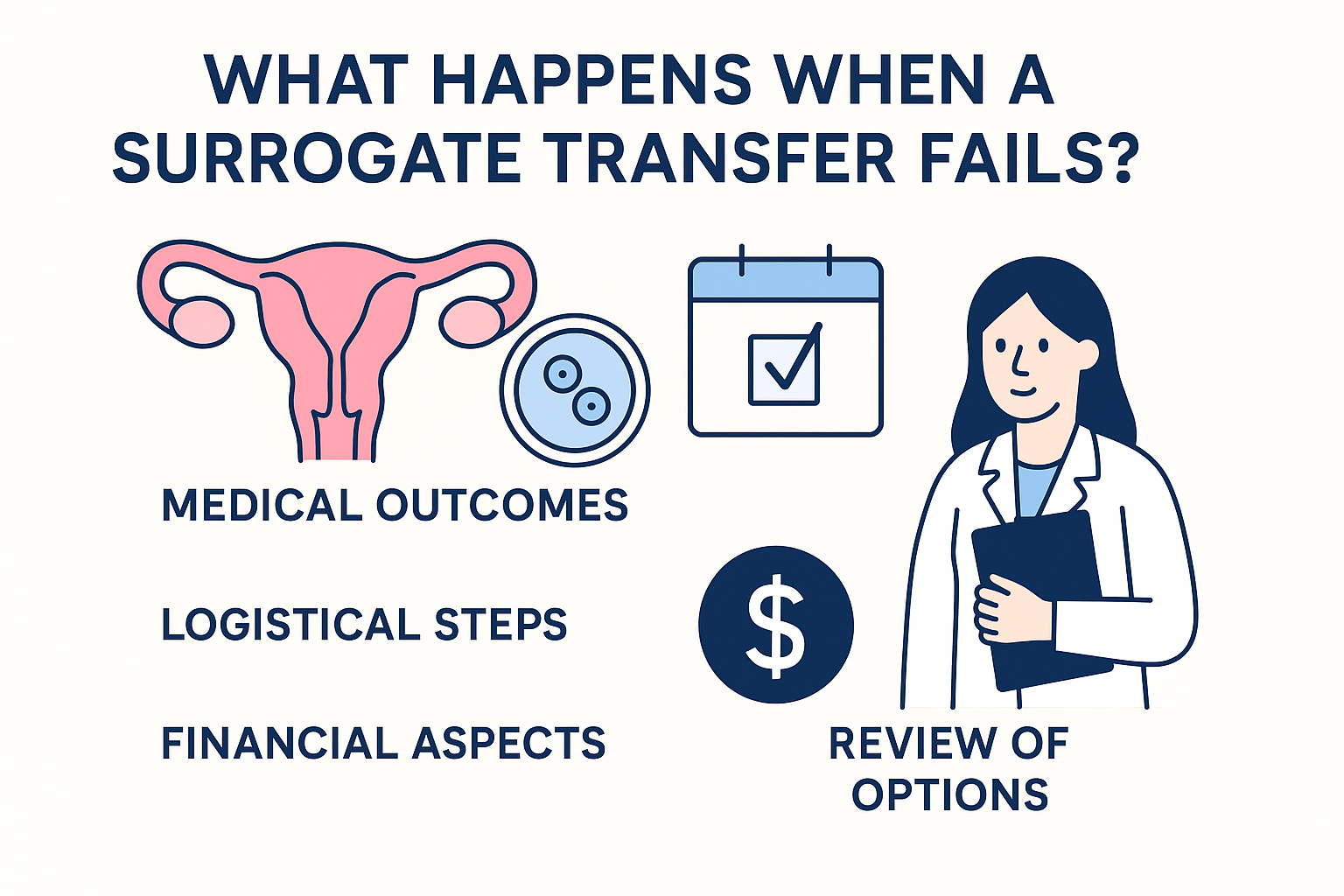
Embryo transfers do not always result in pregnancy, even under the most carefully controlled medical conditions. According to the American Pregnancy Association, multiple factors affect the success of embryo transfer, and careful medical follow-up helps guide next steps if a transfer fails. A failed surrogate transfer doesn’t mean the program is broken or starting over. In most cases, it’s already accounted for – medically, contractually, and logistically. SILK Medical structures its programs with this in mind, so intended parents can continue without unnecessary delays or costs.
Medical Follow-Up After Failed Transfer
The first step after a negative result is medical confirmation. Blood hCG levels are tested to confirm that implantation did not occur. If there was even a brief implantation attempt, the results might show a chemical pregnancy, which doctors monitor but typically do not consider viable.
In most cases, if the surrogate remains in good health and her endometrial lining returns to normal, there’s no need for repeat screenings. Her next cycle can be used for a second transfer without redoing all medical tests. Doctors may evaluate embryo quality, the timing of transfer, or the uterine response, but there’s no need to start from zero.
What Happens Logistically: Another Transfer or New Surrogate?
In SILK Medical’s Effective Program, only one embryo transfer is included. If it fails, the intended parents can request a second transfer at an additional cost of 2,500 USD. In contrast, the Classic and Successful programs include up to three embryo transfers. If one fails, the next attempt proceeds with the same surrogate, assuming she is medically cleared.
If all included transfers are used and none result in pregnancy, the intended parents have two choices: purchase an additional transfer or request a new surrogate. A rematch is only required if the original surrogate is no longer medically suitable. In that case, the clinic handles the change at no additional cost. However, if the parents simply prefer to switch, a new surrogate match costs 2,500 USD, plus 600 USD to re-notarize the surrogate agreement.
This structure avoids unnecessary delays. Most transfer failures are addressed by continuing with the same surrogate in the next menstrual cycle, without pausing or re-contracting.
Financial Overview: What You Pay After a Failed Transfer
The Guaranteed Program includes unlimited embryo transfers until successful childbirth. No added fees are required for repeat transfers or surrogate rematching. This program is often chosen by patients who want to avoid variable costs and commit to a full-cycle pathway without financial risk.
In other programs with fixed numbers of transfers, additional costs only appear if all included attempts are used. The price for an extra frozen embryo transfer is 2,500 USD. Importantly, this fee covers the medical procedure itself. The surrogate mother’s compensation, rent, and care are already handled under the existing agreement and do not restart. This is often misunderstood by new patients, who worry they will need to pay the full program fee again. They won’t.
If the parents ask for a new egg donation IVF cycle because no embryos remain, that cost is separate. Typically 8,500 USD for a new IVF with a donor, or 6,500 with own biological material.
Creating New Embryos: Time Gap Between Transfers
When there are no frozen embryos left after a failed transfer, the next step depends on where the embryos were created. If the original IVF was done at SILK Medical, a second stimulation cycle can begin quickly. If embryos were created abroad, patients may take time to undergo another IVF cycle in their home country and ship the new embryos to Georgia or Armenia. Transfers can resume as soon as embryos are available.
The program itself remains valid even with long pauses between transfers. There is no expiration on your contract, and rematching is possible at any time, though surrogate availability may vary.
Emotional Expectations vs. Program Design
It’s common to feel disappointment after a failed transfer. But this outcome does not indicate that the program has failed. Most SILK Medical programs are intentionally designed to include multiple transfer attempts because success is not always immediate. One negative result, while frustrating, is built into the structure.
The success rate per transfer with genetically tested embryos remains high. Most patients achieve a confirmed pregnancy within the first or second attempt. And when a third attempt is needed, it’s almost always the last.
When You’re Ready to Try Again
If your transfer failed and you’re unsure what happens next, contact your SILK coordinator directly. They can confirm how many transfer attempts remain in your program, whether your surrogate is cleared for another attempt, and if any embryo options are still available.
In most cases, the next transfer can proceed without delay and without additional stress or cost.

 English