


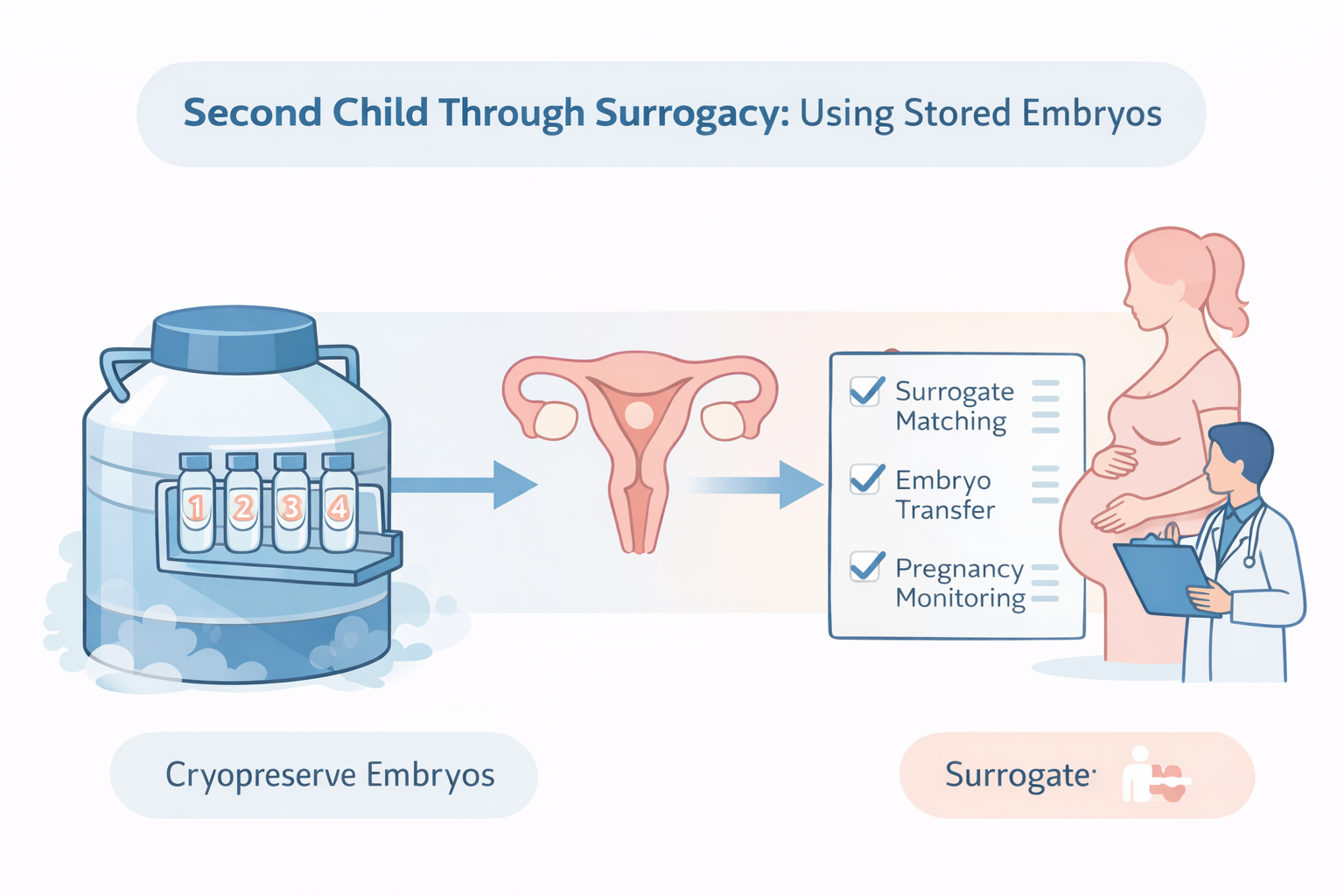
For many parents who have already completed IVF or a surrogacy program, thoughts about a second child tend to surface gradually. This usually happens well after life has settled into a new rhythm. Sometimes it coincides with a milestone in the first child’s life. In other cases, it starts with a practical reminder, such as an embryo storage renewal notice, that brings the topic back into focus.
By this stage, the emotional context is different from the first attempt. The medical process is familiar, the outcome of the initial program provides reference, and many of the unknowns have already been resolved. Because embryos are already available, planning a second child through surrogacy often feels more measured and predictable.
What long-term embryo storage actually means
Embryos created through IVF are preserved using vitrification, a rapid freezing method that halts biological activity at the moment of freezing. Once vitrified, embryos remain in a stable state as long as storage conditions are maintained correctly.
In clinical practice, embryos are routinely stored for many years before being transferred. Storage periods of five, eight, or even ten years are not unusual. The factors that influence embryo potential are tied to the age and medical profile of the genetic parents at the time the embryos were created, along with laboratory conditions during fertilization and culture. The length of storage itself does not introduce decline when proper cryostorage standards are followed.
For families who created embryos earlier in life, returning to those embryos years later is often medically reasonable and, in many cases, advantageous compared to starting a new IVF cycle at an older age.
Medical steps when using stored embryos again
Returning for a second surrogacy program with stored embryos simplifies the medical process considerably. Since embryo creation has already taken place, there is no need for ovarian stimulation, egg retrieval, or fertilization procedures. The focus shifts to reviewing embryo records, planning the thaw protocol, and preparing the surrogate for transfer.
Endometrial preparation follows established medical protocols, with close monitoring to align the uterine environment with the timing of the thawed embryo. Laboratory handling of thawed embryos follows the same standards applied to fresh cycles, including quality control and embryologist oversight.
Clinics with extensive experience in long-term cryostorage and frozen embryo transfers, such as SILK Medical, routinely work with embryos created years earlier, including cases where siblings are born several years apart using embryos from the same IVF cycle.
Surrogate matching for a second program
A second surrogacy program always involves a new surrogate, even when the first experience was positive. Matching follows the same medical screening, psychological evaluation, and legal preparation used in initial programs.
Many returning parents choose to apply the same criteria they used before, while others adjust their preferences based on what they learned during the first pregnancy. Both approaches are common. In practical terms, matching timelines for second programs are usually comparable to first-time cases and can be shorter when requirements are more flexible.
From an operational standpoint, the process does not become more complex simply because it is a second child. The structure remains the same, with adjustments made only where parents specifically request them.
Legal considerations when using stored embryos
From a legal perspective, a second surrogacy program with stored embryos is typically more streamlined than the first. Core documents such as marriage certificates or proof of cohabitation are often already prepared in the correct format. Depending on their age and local requirements, these documents may still be valid or may need minor updates.
Powers of attorney and consent forms are generally reissued to reflect the new program, even when the legal framework itself has not changed. Parentage recognition follows the same rules as before, and the use of previously created embryos does not introduce additional legal complexity.
Because the intended parents and genetic material remain the same, authorities usually treat this as a continuation of family planning rather than a new legal scenario.
How costs typically differ from the first program
One of the most noticeable differences between the first and second surrogacy programs is cost structure. When embryos are already available, families avoid expenses related to IVF cycles, stimulation medications, egg retrieval, and donor compensation if donor eggs were used previously.
The financial focus shifts to surrogate matching, medical preparation for embryo transfer, pregnancy management, and delivery-related care. While exact figures depend on the number of transfer attempts included and whether embryos are stored locally or require transport, overall budgeting is often simpler and more predictable than during the initial program.
Timing and family decisions
There is no standard timeline for returning to stored embryos. Some parents begin planning when their first child is still young, while others wait several more years. The decision often aligns with practical considerations rather than urgency, including family stability, work schedules, or personal readiness.
Stored embryos allow families to approach this decision without pressure. They preserve an option that remains available until parents feel ready to act. For those who have already navigated the complexity of IVF and surrogacy once, that flexibility often brings a sense of calm and confidence when considering the next step.

 English