


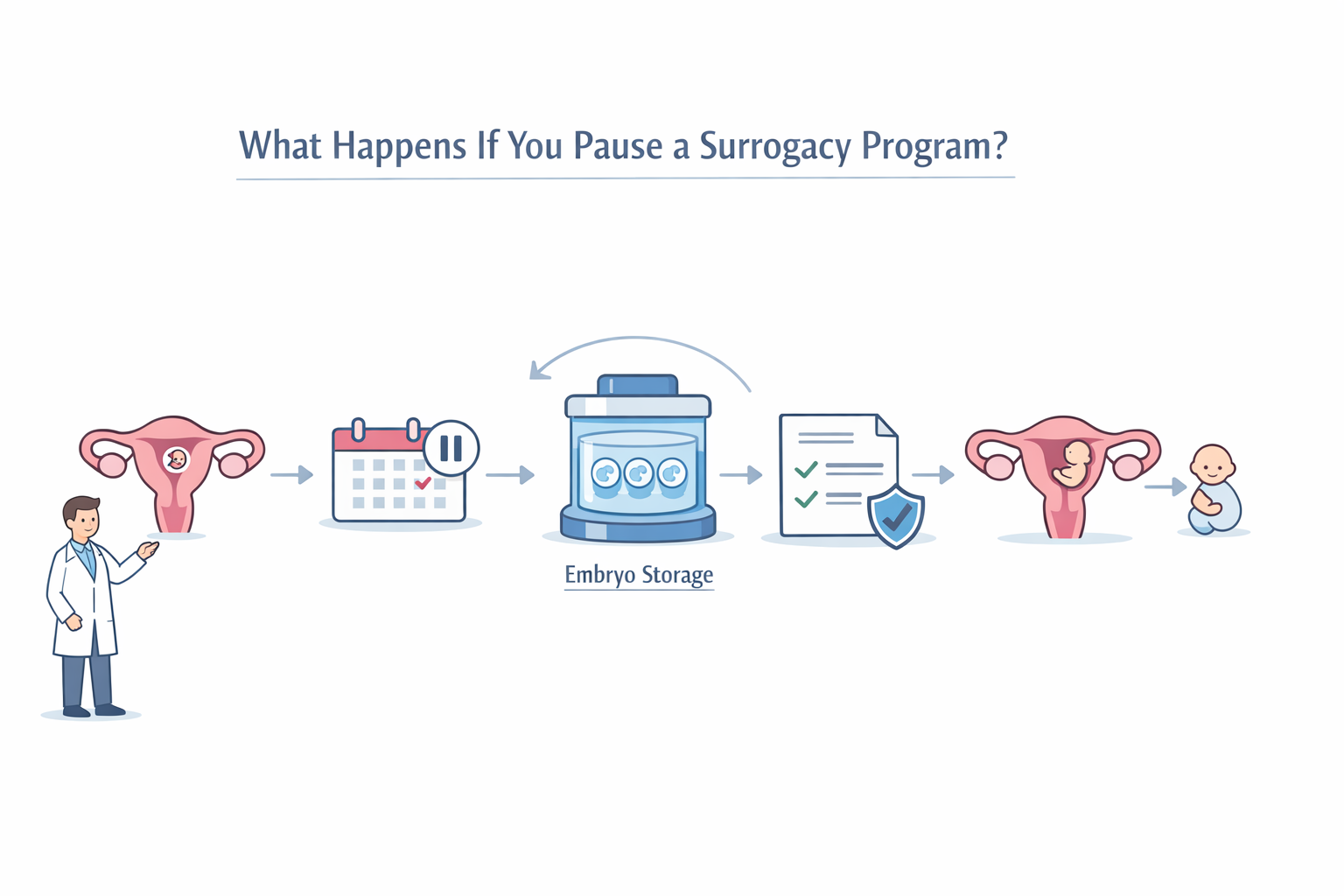
Surrogacy programs are usually discussed in terms of timelines and success rates, yet very few clinics explain what happens if the process needs to pause. A transfer can fail, embryos may need to be created again, or travel plans and medical situations can delay the next step. Family or financial circumstances sometimes require intended parents to take time before continuing. These situations are more common than many expect, and they raise practical questions about contracts, surrogate availability, embryo storage, and financial obligations. Understanding how a program continues after a pause is an important part of assessing how well a clinic is structured beyond headline success rates.
If an Embryo Transfer Fails
Even with good-quality embryos and proper endometrial preparation, implantation is never guaranteed. When a transfer results in a negative hCG test, the first step is medical review. The surrogate’s cycle is assessed, medications are adjusted if needed, and the next transfer can usually be planned within one or two menstrual cycles. According to data from the Society for Assisted Reproductive Technology (SART), surrogacy transfer success rates are typically around 50-60% per attempt, highlighting why pauses for additional tries are common.
How this works depends on the program structure.
In programs designed for patients with existing embryos, the number of included transfers matters. SILK Medical’s Classic Surrogacy Program includes up to three transfer attempts. The Effective Surrogacy Program includes one transfer. If additional transfers are needed beyond what is included, they are performed using remaining embryos under the program’s stated additional transfer fee conditions.
In donor-egg surrogacy programs, the structure is different. The Successful Surrogacy Program includes up to three transfers. The Guaranteed Surrogacy Program includes unlimited embryo transfers until a live birth.
In most failed transfer cases, the surrogate does not need to be replaced. The same surrogate can proceed with the next transfer once medically cleared. Replacement is only considered if there is a medical indication.
If There Are No Embryos Left
Another common pause occurs when all available embryos have been transferred and pregnancy has not been achieved. In that situation, intended parents may need to create new embryos.
Embryo creation can be done locally in the patient’s home country and shipped, or performed at the clinic. If IVF is done at SILK Medical, we offer the embryo creation programs that include stimulation, retrieval, fertilization, ICSI, cultivation, PGT-A for up to five embryos, vitrification, and storage.
During this time, the surrogacy contract remains valid. The program does not reset. Once new embryos are available and medically approved, the transfer phase resumes. This structure allows intended parents to pause for medical preparation without losing contractual continuity.
Health or Personal Reasons for a Pause
Sometimes the pause has nothing to do with embryos. Intended parents may face medical treatment, travel restrictions, financial reorganization, or family emergencies. In other cases, a pregnancy loss may require recovery time before the next transfer.
In these situations, embryos remain cryopreserved under laboratory conditions. Cryopreservation is part of both IVF and surrogacy workflows and allows embryos to remain stable until the next transfer window.
The timeline is adjusted rather than terminated. When intended parents are ready to continue, medical screening is updated if necessary and the transfer schedule is rebuilt.
Contract Validity During a Pause
One of the most frequent concerns is whether the contract “expires” during a delay.
In structured programs, contracts remain active unless formally terminated. Stage-based payment models clarify what has already been completed and what remains pending.
If a surrogate must be replaced for medical reasons, replacement is typically covered within program terms. If intended parents request a change without medical grounds, replacement fees and legal documentation fees may apply according to program conditions.
The key distinction is whether the pause is medical, logistical, or elective. Each scenario has predefined procedural steps. The process continues within a defined framework rather than restarting from zero.
Storage and Restart Rules
Embryo storage is central to managing pauses. After fertilization and biopsy, embryos are vitrified and stored under controlled laboratory conditions. Storage periods are defined in the IVF and surrogacy documentation, and extensions are possible when needed.
When restarting, the process typically includes:
- Updated infectious disease screening if required by regulation
- Review of surrogate availability
- Cycle synchronization and endometrial preparation
- Transfer scheduling
The medical workflow resumes from the last completed step rather than repeating earlier stages unnecessarily.
What This Means in Practice
Pauses in surrogacy programs are a realistic part of treatment. Transfers sometimes fail, available embryos may be used without achieving pregnancy, and personal or medical circumstances can delay the next step. The difference between a stressful interruption and a manageable delay depends on how clearly the program structure defines next steps.
Well-designed surrogacy programs as offered by SILK Medical anticipate these scenarios. They outline transfer limits, replacement rules, storage conditions, and restart procedures in advance. Intended parents should understand these mechanisms before signing a contract, since they are part of the real lifecycle of assisted reproduction, not an exception to it.

 English