


Embryo shipment between countries is often viewed as a straightforward logistical step once laboratory compatibility and transport arrangements are confirmed. In practice, the process also involves a complex legal chain that extends far beyond the medical aspects of storage and transfer.
At SILK Medical, coordination teams frequently work with intended parents who already have embryos created abroad and are planning surrogacy programs in Georgia or Armenia. In these cases, the documentation linked to embryo creation becomes part of the legal foundation for registering the child after birth.
Even when embryos are safely transported and remain fully viable from a clinical perspective, the format, timing, and international recognition of the accompanying records can influence whether local authorities are able to complete birth registration through an administrative procedure or whether additional legal steps may be required.
Surrogacy Birth Registration Depends on Legal Traceability
In Georgia and Armenia, surrogacy birth registration is normally handled as an administrative process rather than through the courts. Civil authorities review documentation confirming the genetic origin of the embryos, the identity of the intended parents, and the medical timeline of fertilization and storage.
When this document trail is clear and legally recognizable, the child’s birth certificate can usually be issued without prolonged legal review. This administrative pathway is one of the reasons many international patients choose these jurisdictions.
Diplomatic Recognition Can Affect Document Acceptance
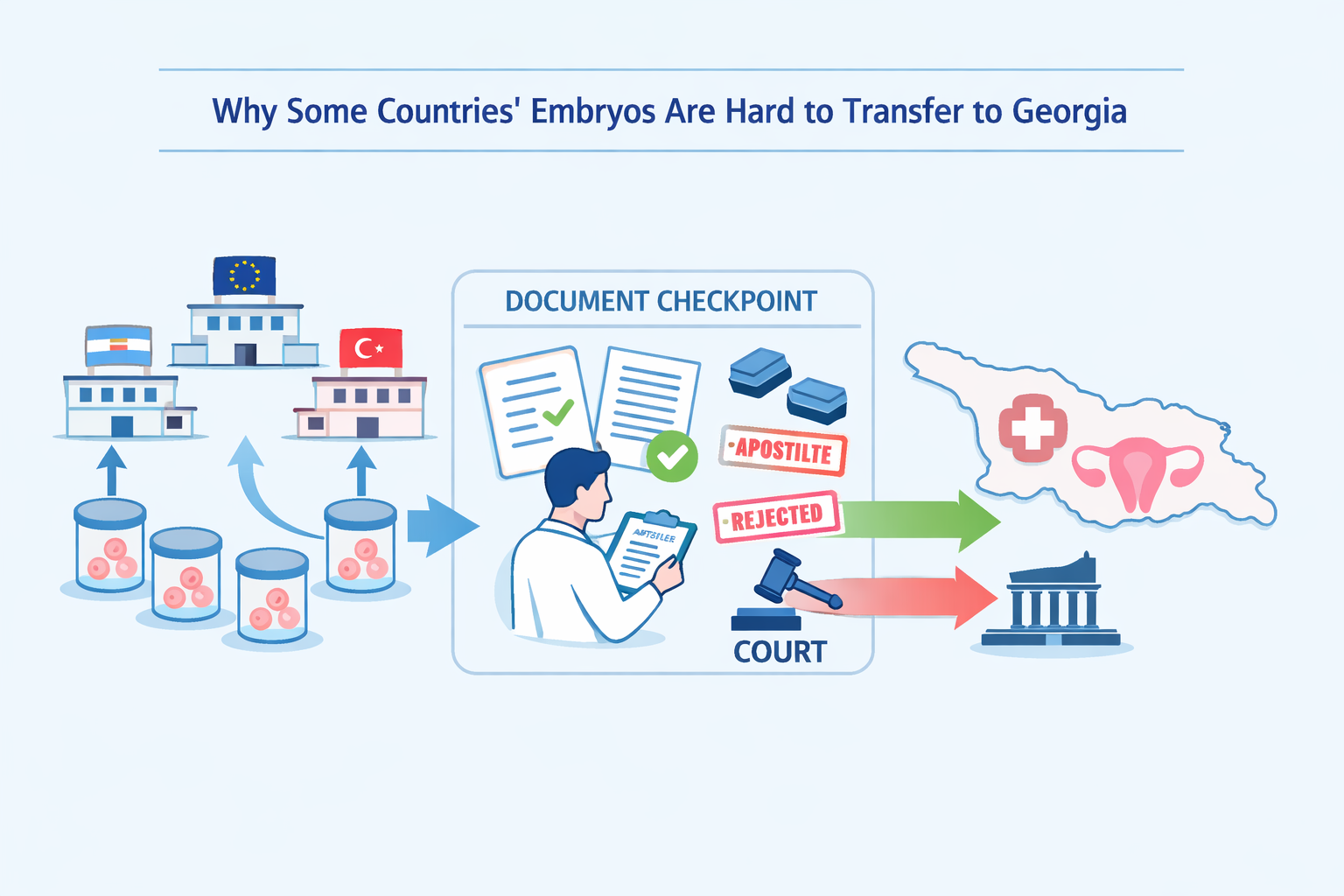
Difficulties may arise when embryos were created in countries whose legal systems or diplomatic relationships limit the ability of local authorities to recognize official documents issued there.
An apostille confirms the authenticity of a signature or stamp on a document, yet it does not automatically guarantee that another state will accept the legal effect of that document within its own civil registration framework.
In situations where diplomatic channels are limited or formal legal cooperation mechanisms are absent, authorities may be unable to rely on the documentation provided. As a result, a case that would normally be processed administratively can be redirected into a court procedure to establish legal parentage. This shift can significantly extend the timeline for obtaining a birth certificate and completing post-birth formalities.
Differences Between Administrative and Court-Based Surrogacy Systems
Another layer of complexity relates to differences between legal models of surrogacy regulation. Some countries operate systems in which surrogacy arrangements require judicial approval before treatment or where intended parents must complete an adoption-style process after the child is born.
These approaches can conflict with the civil registration model used in Georgia and Armenia, where intended parents are recognized directly once the necessary documentation is reviewed. When embryos originate from court-based jurisdictions, authorities may need additional legal clarification before accepting the original medical records as sufficient proof of parental rights.
Why Documentation Format and Medical Timing Matter
Even in cases where diplomatic recognition is not a concern, the structure and timing of medical documentation remain critical. Clinics receiving embryos for a future surrogacy program typically require a formal certificate of embryo creation that clearly states the date of fertilization and identifies the genetic parents with their passport data.
The document must be signed by responsible medical staff and officially stamped. Supporting records such as the freezing certificate and culture protocol are also required, along with infectious disease screening results performed shortly before the embryos were created.
These coordination requirements form part of the evidence later reviewed by civil authorities when issuing the birth certificate. The SILK Medical legal team explains that the format and timing of these documents can determine whether a case proceeds smoothly through the registration process or encounters delays due to missing or inconsistent data.
Apostille Timing and Retroactive Documentation Challenges
Timing issues can further complicate matters. In some situations, documentation must accurately reflect the original medical timeline, including the exact date of fertilization, even if the formal certificate is prepared later.
Apostille procedures must also be completed correctly and in the appropriate jurisdiction. If documents are issued in a format that cannot be amended or legalized according to local requirements, resolving these discrepancies after embryos have already been shipped may require additional legal consultation or procedural adjustments.
Practical Implications for Intended Parents
For intended parents, the practical consequences of these legal and administrative nuances can be substantial. Delays in birth registration may lead to extended stays in Georgia or Armenia, while documentation is clarified. Court proceedings to confirm parentage can introduce additional legal costs and extend the timeframe for obtaining travel documents for the child. Embassy procedures may also be postponed until the civil status of the newborn is formally established.
Careful planning before initiating embryo transport can help reduce these risks. Reviewing the jurisdiction where the embryos were created, confirming the acceptability of documentation formats, and understanding how local authorities handle foreign medical records are all important steps.
When Creating Embryos Locally May Offer Greater Predictability
In some cases, creating new embryos within Georgia or Armenia’s legal framework can offer a more predictable pathway by aligning medical treatment, documentation, and civil registration requirements from the outset.
Cross-border fertility treatment continues to expand as patients seek flexible options and advanced reproductive technologies. Alongside medical coordination, however, the legal recognition of documentation remains a central factor in determining how smoothly a surrogacy program can progress.

 English