


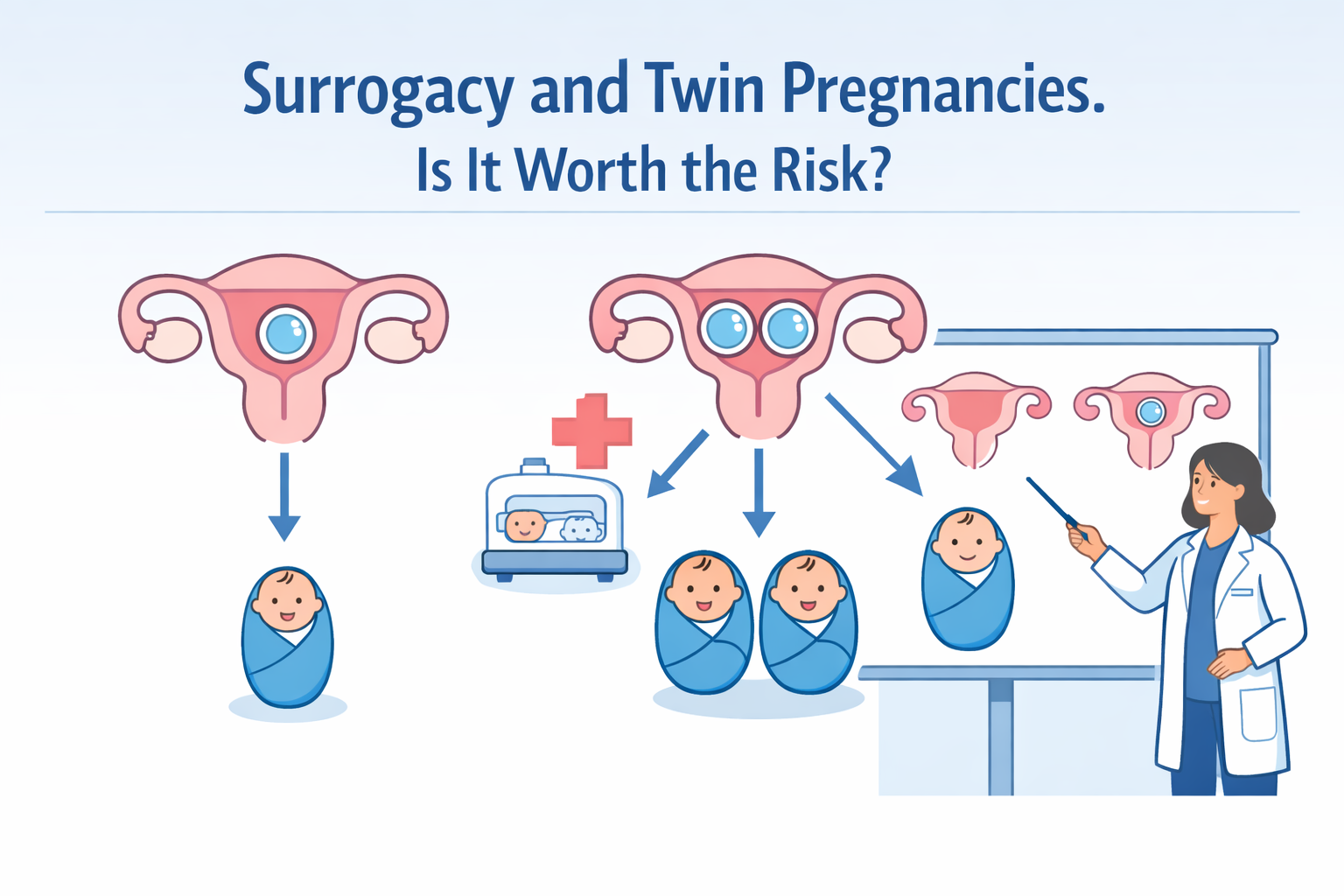
The idea of having twins through surrogacy often feels appealing at first glance. Many intended parents assume that transferring more than one embryo can shorten the timeline to building a family or reduce the overall cost of treatment.
In reality, medical teams approach this question with caution. At SILK Medical clinics in Tbilisi and Yerevan, the discussion about twin pregnancy begins long before embryo transfer takes place, because multiple gestation changes the entire risk profile of the program.
Obstetric complications become more likely, delivery planning becomes less predictable, and the financial structure of the program can shift in ways that are not always obvious at the start. These factors shape how reproductive specialists approach embryo transfer and why expectations around twin outcomes are addressed before the program begins.
Medical risks for the surrogate mother
Carrying twins changes the physical demands of pregnancy in measurable ways. Blood pressure complications are more common, the likelihood of gestational diabetes increases, and the risk of premature labor becomes significantly higher. Placental abnormalities and delivery by cesarean section are also observed more frequently in multiple pregnancies.
From a clinical management perspective this means closer monitoring, more frequent examinations, and a greater probability of hospitalization at some point during the pregnancy. The overall medical load placed on the surrogate is therefore higher even when she is healthy and has previously delivered without complications.
Why premature birth becomes a central concern
Twin pregnancies often end earlier than singleton pregnancies. This is one of the main reasons neonatal intensive care planning becomes part of the conversation. Premature newborns may require respiratory support, temperature regulation, and specialized feeding protocols.
In most surrogacy program structures, neonatal intensive care costs are not included in the package price and must be covered separately by intended parents if such care becomes necessary. This financial variable can significantly affect the final cost of the program, especially if the newborns require extended hospital stay or specialized treatment after delivery.
Why many clinics recommend single embryo transfer
Advances in embryo selection and genetic testing (PGT-A) have changed how fertility specialists approach transfer strategy. When a well-developed embryo with good implantation potential is available, transferring one embryo can often provide strong pregnancy rates while reducing obstetric risk.
Singleton pregnancies are associated with more predictable monitoring schedules, lower rates of emergency intervention, and more stable neonatal outcomes. In the context of surrogacy, this approach also supports clearer planning around legal documentation, travel arrangements, and post-birth logistics, since discharge timing and infant care needs are easier to anticipate.
Transfer policy and realistic expectations about twins
In practical terms, most programs limit the number of embryos transferred during one attempt. Up to two embryos may be transferred in SILK Medical, if medical indications and treatment history support this approach, but two is generally considered the maximum acceptable number.
Even with the transfer of two embryos, twin pregnancy is not guaranteed. Clinical statistics suggest that the probability of twins in such cases usually rises to approximately twenty-five to thirty percent, meaning that many double-embryo transfers still result in a singleton pregnancy.
Biological variability also plays a role. On rare occasions a single transferred embryo may divide naturally after implantation, leading to identical twins without any change in the planned transfer strategy.
Financial implications within surrogacy programs
Multiple pregnancy can influence program costs in several ways. Some surrogacy packages include additional compensation for the surrogate in case of twins, reflecting the increased medical supervision and physical burden associated with carrying more than one fetus. Delivery expenses may also rise due to the higher probability of surgical birth and longer hospitalization.
At the same time, neonatal intensive care costs for premature newborns remain an external financial responsibility in all program structures, even when other elements of pregnancy management are already covered.
Guaranteed programs do absorb specific twin-related obstetric costs such as cesarean delivery or enhanced pregnancy monitoring, while still treating neonatal intensive care as a separate expense category.
How treatment strategy is usually balanced in practice
Decisions around embryo transfer are shaped by a combination of medical safety considerations, expected implantation probability, and long-term program stability. The goal of SILK Medical doctors is to achieve a successful pregnancy while keeping risk levels within a predictable range for the surrogate mother and the newborn.
As reproductive technologies continue to improve, many clinics focus on optimizing embryo quality and timing rather than increasing embryo number, which gradually shifts expectations around twin outcomes in modern surrogacy programs.

 English