


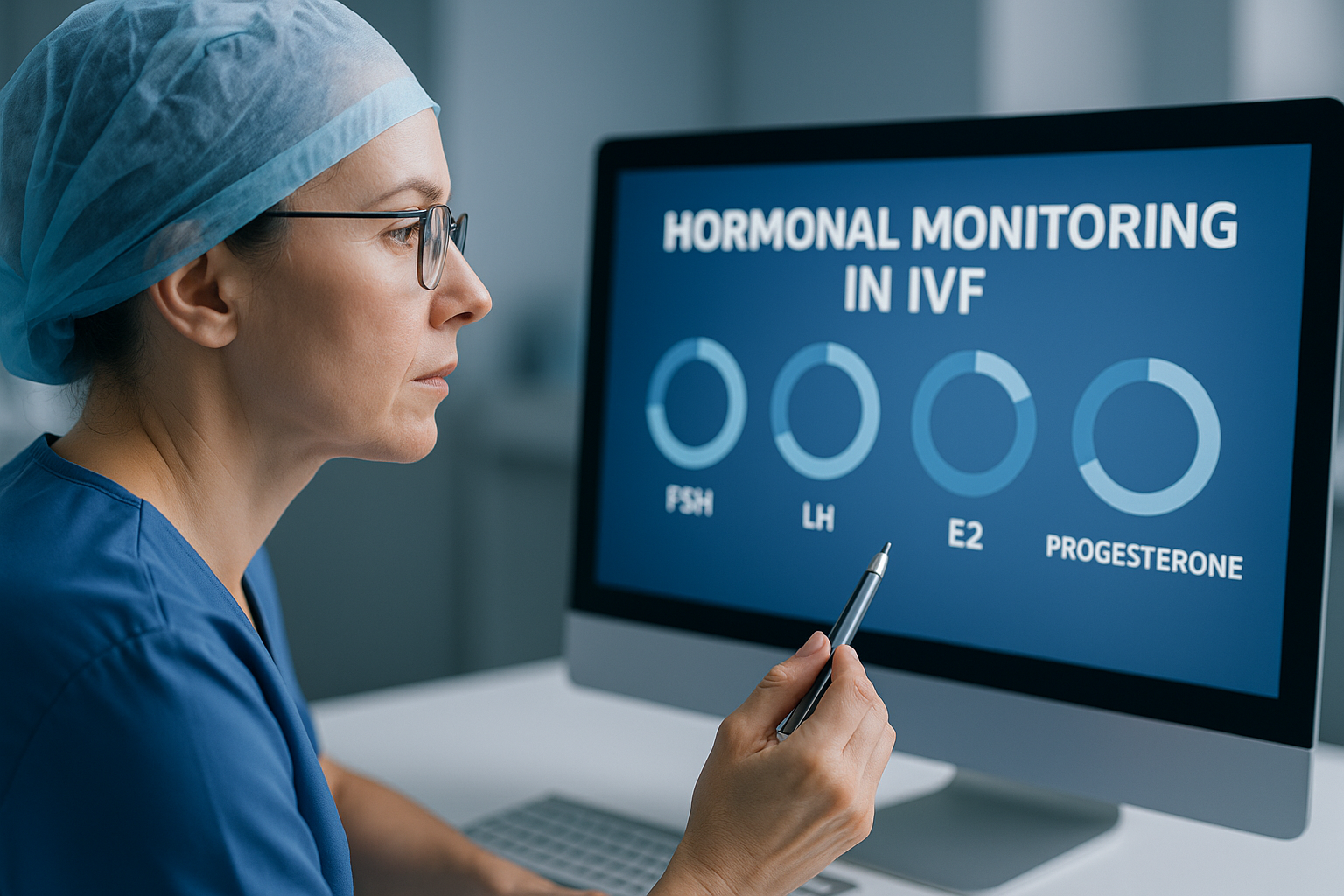
IVF is not a set-it-and-forget-it procedure. It’s a carefully timed sequence of steps that relies on close observation and swift adjustments. At the heart of this process is hormonal monitoring. It helps doctors fine-tune the treatment to each patient’s individual response – whether the goal is retrieving enough mature eggs or preparing the uterine lining for implantation.
Understanding how hormone levels are tracked during IVF helps patients know what to expect and why certain changes are made along the way. It also highlights how clinics like SILK Medical use this data to improve outcomes while avoiding complications.
How Hormonal Monitoring Shapes the IVF Process
At the start of an IVF cycle, hormone testing helps determine a patient’s starting point. For example, measuring follicle-stimulating hormone (FSH) and estradiol (E2) levels on day 2 or 3 of the menstrual cycle gives a baseline for how the ovaries are functioning. This isn’t just background information – it influences the dose of medications used to stimulate follicle growth.
Throughout the stimulation phase, hormone levels are tracked every few days. Estradiol increases as follicles develop. If levels rise too fast, it may indicate a risk of ovarian hyperstimulation syndrome (OHSS), a serious condition that can be avoided with early intervention. If levels are too low, it might signal that stimulation needs to be adjusted to get a better response.
Meanwhile, luteinizing hormone (LH) is monitored to avoid a premature surge. An early spike in LH can lead to ovulation before egg retrieval, which would cancel the cycle. Progesterone levels are also checked to confirm that the uterine lining stays in sync with embryo development. A rise in progesterone too early can interfere with embryo implantation.
In other words, these aren’t just numbers on a chart – they guide nearly every clinical decision.
What the Timeline Looks Like
Hormonal monitoring typically begins just before stimulation starts and continues until the day of the trigger shot. Once the follicles have reached the right size, and hormone levels support the timing, a final injection is given to induce maturation of the eggs. This sets the clock for egg retrieval, which must happen about 36 hours later.
After egg retrieval and fertilization, hormone levels are monitored again in preparation for the embryo transfer. If a fresh transfer is planned, it’s essential that progesterone levels haven’t risen too early. If they have, a frozen transfer might be recommended instead.
Precision Through Individualized Protocols
Not every patient responds the same way to standard doses of medication. That’s why SILK Medical develops custom stimulation plans for each case, based on hormone levels, ultrasound findings, and previous cycle data. This approach improves egg yield and quality while reducing the risk of complications like OHSS.
For example, in younger patients with strong ovarian reserves, a mild protocol may be more appropriate. For older patients or those with a history of poor response, hormone monitoring allows for more aggressive adjustments without overshooting the target.
SILK Medical also uses tools like time-lapse imaging (via AI-based EmbryoScope) and genetic testing (PGT-A) to align embryo development with uterine readiness. Hormonal monitoring remains central to coordinating this process.
Better Outcomes Through Data, Not Guesswork
The success of IVF depends on timing, and timing depends on hormone patterns. Every blood test during an IVF cycle plays a part in making the treatment safer and more effective. At SILK Medical, these measurements are not routine – they are active tools in shaping each patient’s care.
This focus on adaptation, rather than one-size-fits-all protocols, helps explain why the clinic sees over 70% success rates in patients under 35 using their own eggs, and achieves high results even in complex cases.

 English