



More women today are considering pregnancy after the age of 40. For some, it is a conscious choice. For others, it follows years of attempts, unsuccessful treatment, or simply the way life unfolded.
Yet nearly every woman in this age group faces the same questions: are there still real chances of pregnancy, and can IVF help after 40? Are donor eggs always necessary?
As one of the leading fertility clinics in Georgia, we frequently perform IVF for women over 40 and specialize in complex cases. In this article, we look at how age affects the likelihood of pregnancy, what chances remain after 40, and what truly matters for a successful outcome.
Why Do Our Chances of Pregnancy Decline With Age?
Women are born with a fixed reserve of eggs. With age, both the quantity and the quality of those eggs gradually decline. These changes become more noticeable after the age of 35.
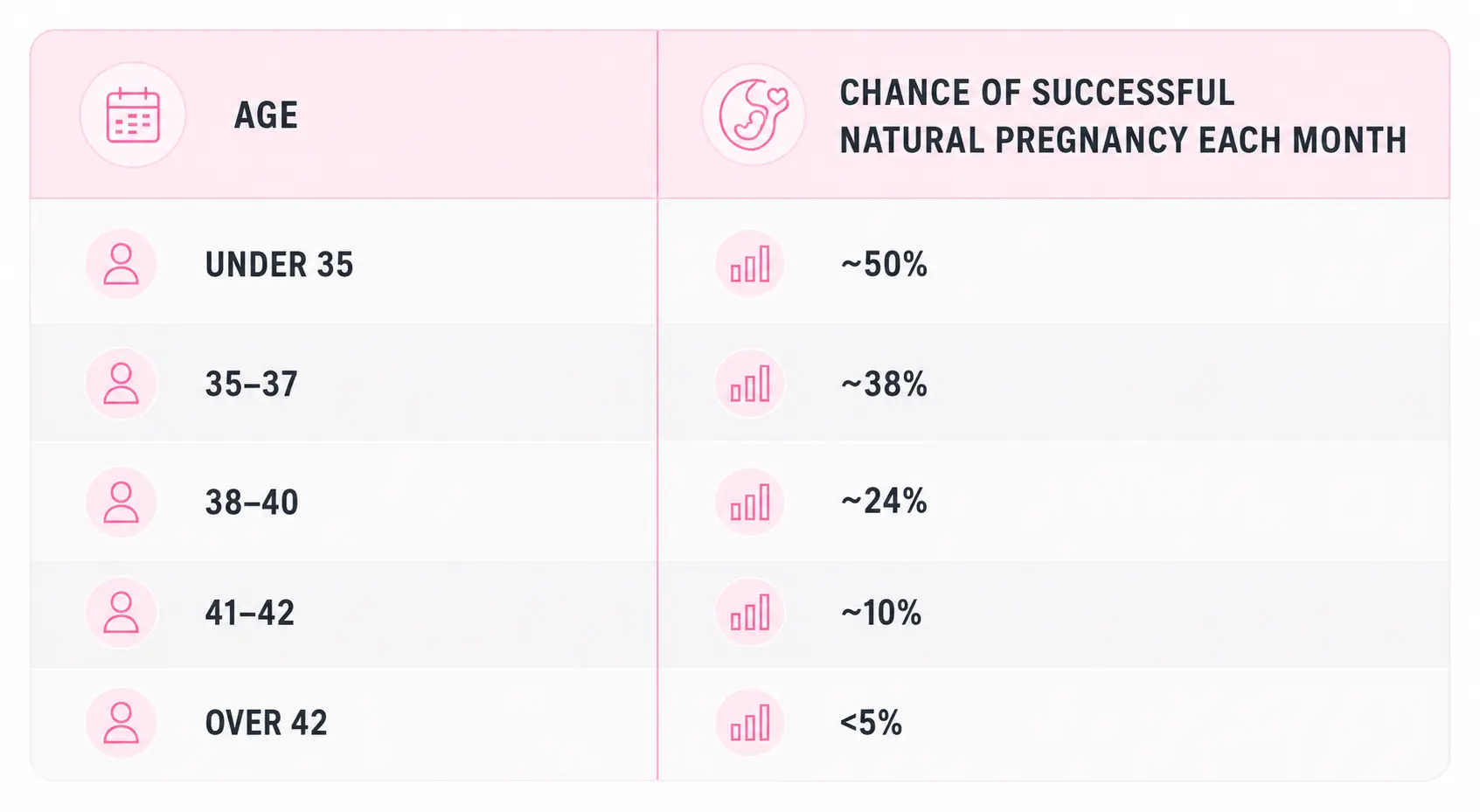
However, age is only one factor. Many women successfully go through IVF after 40 and become mothers, especially with a carefully tailored treatment strategy and an individual approach.
Some patients come to the clinic after failed IVF attempts in other countries. Others are only beginning to think about pregnancy after 40. In each case, different treatment options are possible.
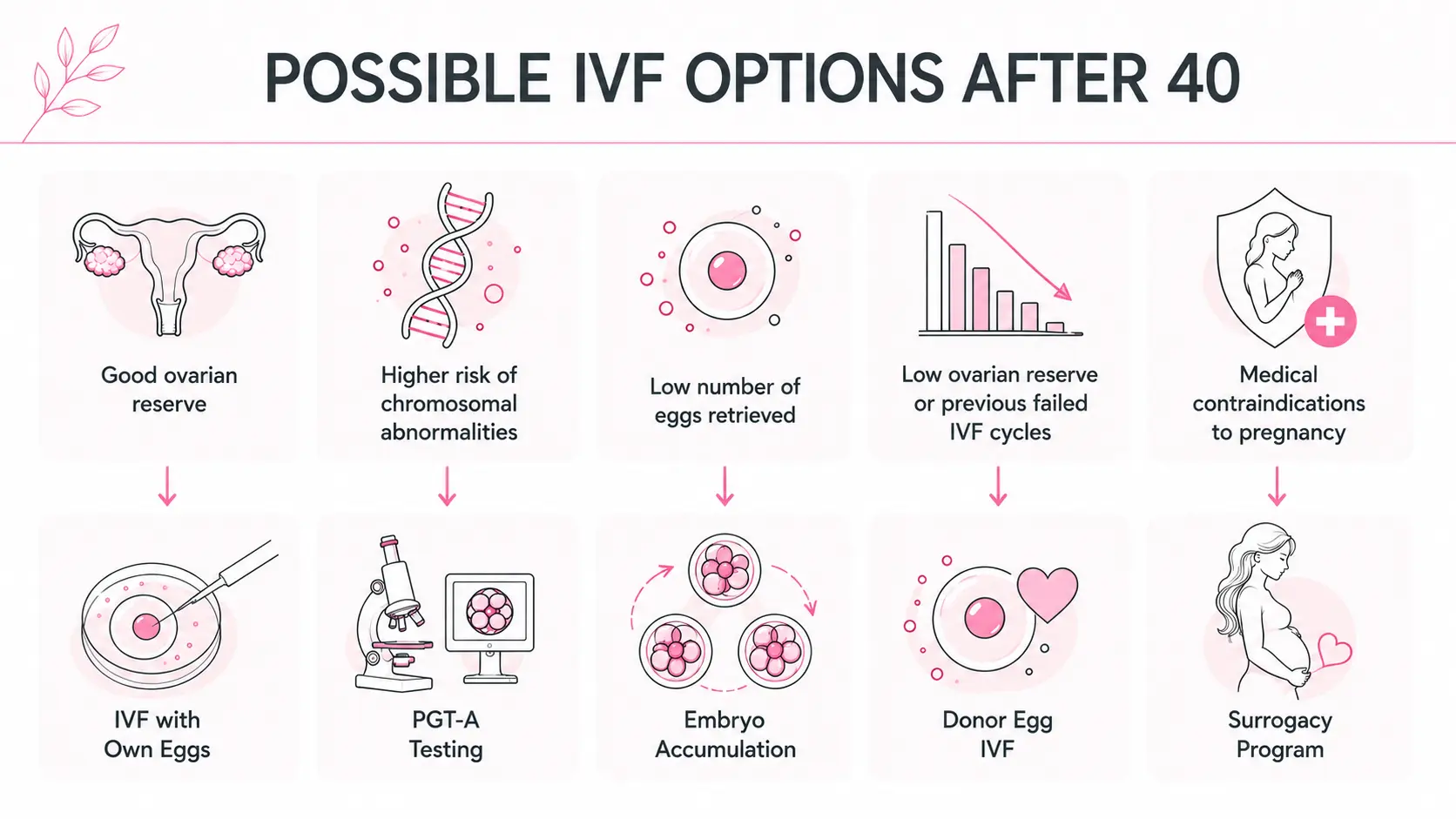
IVF With Own Eggs
In many cases, a woman over 40 can undergo IVF with her own eggs.
If the ovaries continue to function actively and good-quality embryos can be obtained, doctors may recommend a standard IVF program with an individually tailored stimulation protocol.
For some women, good chances remain even after 40, particularly when treatment begins in a timely manner.
At SILK Medical, IVF programs are always built individually, taking into account the patient’s age, examination results, and previous treatment history.
IVF With Preimplantation Genetic Testing (PGT-A)
After 40, the likelihood of chromosomal abnormalities in embryos increases. This is why some patients are advised to consider genetic testing of embryos before transfer.
This type of testing helps to:
- select embryos with the highest potential.
- reduce the risk of a failed transfer.
- increase the likelihood of a successful pregnancy.
For many women, it also helps avoid repeated unsuccessful IVF attempts.
Embryo Banking
After 40, the number of eggs retrieved is often small. In such cases, doctors may recommend several stimulation cycles in a row, followed by embryo freezing.
This approach allows more embryos to be collected, increases the chances of a successful transfer, and provides more flexibility in treatment planning.
It is typically used when the doctor considers it possible to continue treatment with the patient’s own eggs.
IVF With Donor Eggs
Many women find the idea of a donor program intimidating. Yet in certain cases, this is precisely the option that can significantly increase the chances of pregnancy.
Donor programs are usually considered when:
- the ovarian reserve is significantly reduced.
- previous IVF attempts were unsuccessful.
- embryo quality remains low.
For some patients, a donor program becomes the path to a long-awaited pregnancy after years of treatment.
At SILK Medical, IVF programs with donor eggs are available, including options with preimplantation genetic testing and frozen embryo transfer.
Surrogacy Program
In certain cases, patients may be advised to consider a surrogacy program. This decision depends not primarily on age but on medical indications related to the inability or high risk of carrying a pregnancy independently.
In Georgia, surrogacy remains legal for specific categories of patients, including foreign citizens. SILK Medical supports patients through every stage of the program — from selecting a surrogate mother to embryo transfer and pregnancy management.
What Can Improve the Chances of Successful IVF?
Age is an important factor, but far from the only one.
The likelihood of a successful pregnancy is influenced by embryo quality, the condition of the endometrium, the partner’s sperm quality, the woman’s overall health, as well as the experience of the specialists and the capabilities of the embryological laboratory.
This is why two women of the same age may have very different prognoses. Reproductive specialists always assess each situation individually.
Modern technologies also help improve the chances of success. At SILK Medical, embryo development monitoring systems allow specialists to assess embryos more precisely and select the most promising ones for transfer. One such technology is the AI-powered EmbryoScope system.
Why Do Many Women Choose IVF in Georgia?
For many patients, what matters is not only the technology but also the ability to start treatment faster, avoid long waiting lists, and receive an individual approach.
Georgia remains one of the popular destinations for fertility treatment thanks to a combination of modern reproductive medicine, flexible legislation, and more accessible program costs compared with many countries in Europe and the United States.
The Key Things to Remember
After 40, the path to pregnancy can indeed be more complex, but it does not mean there are no chances.
Modern reproductive medicine offers a range of options — from IVF with one’s own eggs to donor programs and preimplantation genetic testing.
In many cases, it is precisely the individual approach and a carefully chosen treatment strategy that lead to a successful pregnancy, even after several unsuccessful attempts.
Planning IVF After 40?
The specialists at SILK Medical work with complex fertility cases and help develop an individual strategy for every patient.
Contact our team to discuss possible treatment options and receive a personal consultation.

 English