


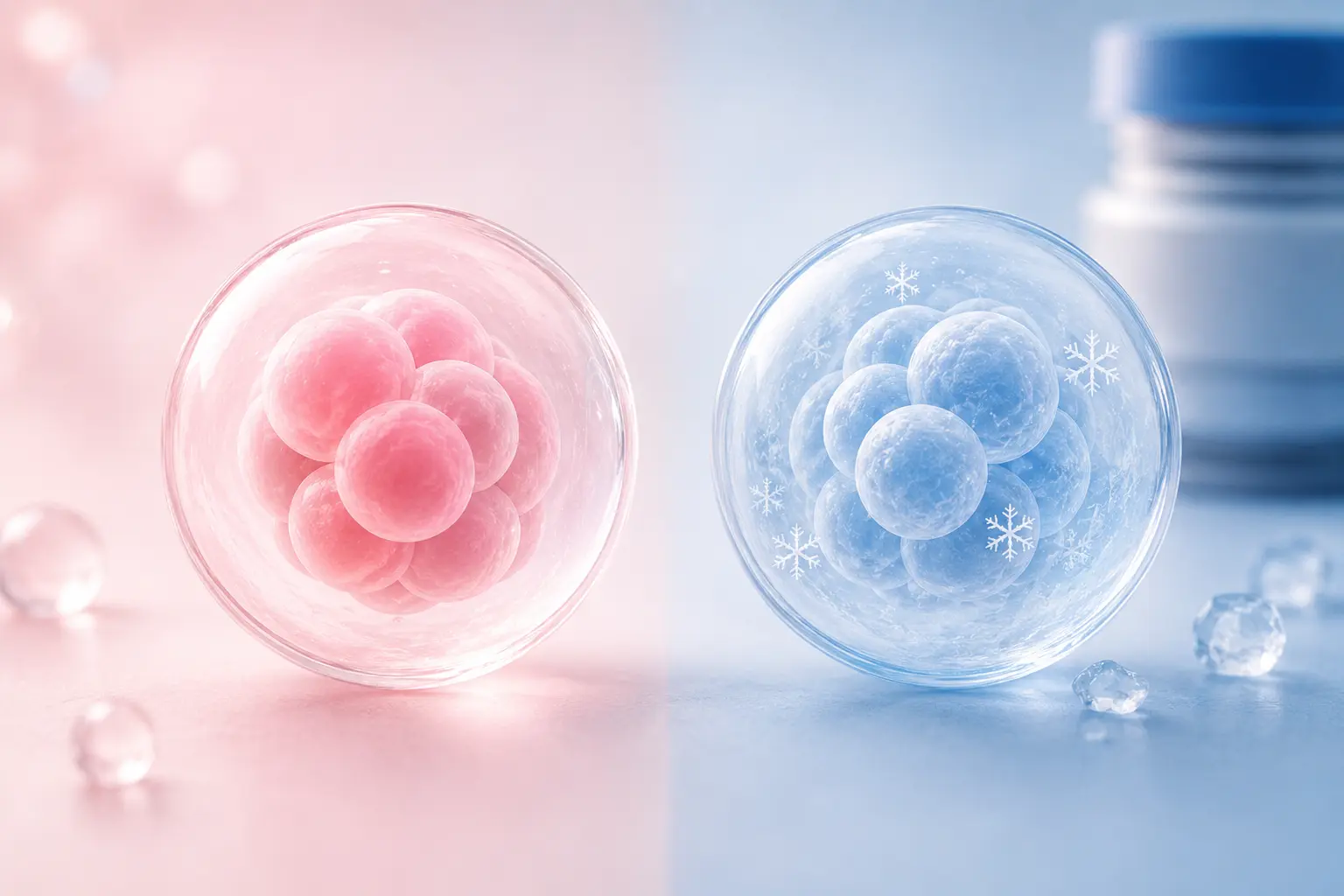
For many couples, the most nerve-wracking stretch of an IVF cycle begins after fertilization. That’s the moment a familiar question surfaces: what happens next? Is it better to transfer the embryo right away, or freeze it first and schedule the transfer for a later cycle?
At first glance the answer seems self-evident. A fresh embryo ought to have the upper hand, since it hasn’t been put through cryopreservation. Yet in modern reproductive medicine, the picture is far less clear-cut.
To understand why this choice even arises, it helps to look first at what actually happens to embryos after fertilization in an IVF program.
How Embryos Are Created During an IVF Cycle
An IVF cycle starts with ovarian stimulation, which allows several eggs to be retrieved within a single cycle.
After the egg extraction, they are fertilized in the laboratory using sperm from the partner or a donor. Over the next several days, embryologists monitor the embryos as they develop, assess their quality, and decide on the next step in the treatment plan. The choices are — to proceed with an immediate fresh transfer in the current cycle, biopsy the embryos and perform genetic testing (PGT-A), or cryopreserve the embryos for later use.
Embryo development at SILK Medical is tracked using advanced monitoring systems, including the AI-powered EmbryoScope. This technology allows continuous observation of the embryos without removing them from the incubator, and it yields additional data points that help embryologists make more grounded decisions at each stage of treatment.
Why Did Frozen Transfers Become a Thing in the First Place?
Just a few years ago, a fresh transfer was considered the default step in an IVF cycle. Once the embryos were obtained, physicians aimed to perform the transfer as quickly as possible.
As reproductive medicine evolved, it became apparent that speed doesn’t always translate into a better chance of pregnancy.
After stimulation, a woman’s body sometimes needs time to recover. In addition, modern freezing techniques make it possible to preserve embryos without any meaningful drop in their implantation potential.
This gave clinicians the leeway to plan treatment with greater flexibility and to pick the most favourable window for the transfer itself.
Today, embryo cryopreservation is often used not because the transfer must be postponed, but because such an approach may help create better conditions for pregnancy to take hold.
The Pros and Cons of a Fresh Embryo Transfer
A fresh transfer makes it possible to place the embryo into the uterus just a few days after fertilization, with no additional wait and no freezing in between. For many patients, that shortens the road to pregnancy.
That said, a fresh transfer isn’t the right fit for everyone. After stimulation, a woman’s body may need time to rebound, and the hormonal shifts involved can affect endometrial receptivity. This is precisely why, in certain situations, physicians recommend freezing the embryos first and performing the transfer later on.
What’s more, when preimplantation genetic testing (PGT-A) is planned, a fresh transfer is typically off the table, since obtaining the test results takes additional time.
The Pros and Cons of a Frozen Embryo Transfer
A frozen transfer allows the embryo to be placed at a more suitable moment, once the woman’s body has fully recovered from stimulation. This approach also opens the door to genetic testing of the embryos when indicated, and to a more careful preparation of the endometrium for pregnancy.
For many patients, this becomes part of a deliberately mapped-out treatment strategy rather than a fallback measure.
The main downside, for some couples, is the additional wait. After freezing, the transfer doesn’t happen straight away but in one of the following cycles. Emotionally, that can be hard to sit with, particularly when the road to pregnancy has already been long.
Many patients also worry that freezing might compromise embryo quality. Modern vitrification methods, however, preserve embryos with very high post-thaw survival rates. That is why frozen embryos are now widely used in IVF programs across the globe.
What really matters for a successful transfer, is a combination of the freezing procedure itself, the quality of the embryology laboratory, as well as the storage conditions, and the thawing process. Each of these stages directly shapes the embryo’s subsequent development, and each one calls for a high degree of precision.
Which Yields a Higher Chance of Pregnancy: Fresh or Frozen?
Today, successful pregnancies occur after both fresh and frozen transfers. Thanks to modern freezing technologies, the gap between the two approaches has narrowed considerably.
In some situations, a frozen embryo transfer may in fact offer better odds of success. The reason is fairly straightforward: the clinician gains the ability to prepare the endometrium separately from the stimulation cycle and to choose the most propitious moment for the transfer.
This does not mean, however, that frozen embryos are always the better option. For some patients, a fresh transfer remains a thoroughly effective course of treatment.
Contemporary studies show that treatment success depends on much more than whether the transfer is fresh or frozen. A woman’s age, embryo quality, endometrial status, the need for genetic testing, and other individual factors all carry significant weight.
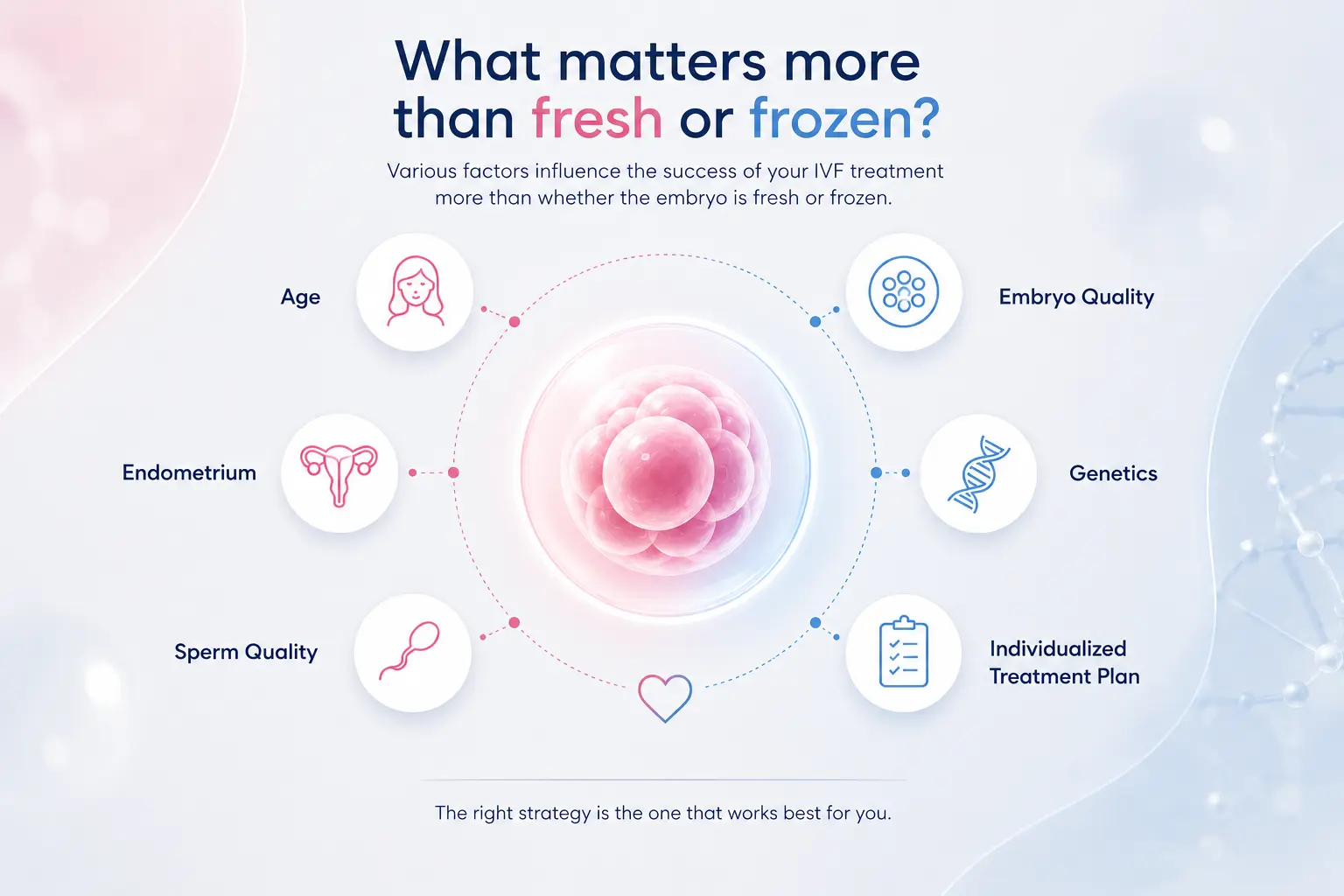
This is precisely why reproductive medicine is gradually moving away from one-size-fits-all answers. Rather than asking “Which is better — fresh or frozen?”, clinicians are increasingly asking a different question: “Which strategy will give the best odds of a successful pregnancy in your particular case?”
Individualised Care Matters More Than the Method Itself
SILK Medical team makes the decision between a fresh and a frozen transfer on a case-by-case basis, after evaluating embryo quality, endometrial status, diagnostic findings, and the patient’s treatment goals.
The clinic works with both fresh and frozen transfers, donor-oocyte programs, preimplantation genetic testing (PGT-A), and international fertility treatment programs.
For patients travelling to Georgia from abroad, frozen embryos also bring an added layer of flexibility, making it easier to schedule treatment and plan subsequent visits to the clinic.
Whether the conversation revolves around a fresh or a frozen transfer, the reproductologist’s chief task remains the same: to choose the strategy that gives the best possible chance of a healthy pregnancy in your specific situation. For that reason, every decision is made individually, weighing medical indications, diagnostic results, and the future parents’ goals.
Still Have Questions?
If you are planning an IVF cycle, considering the transfer of previously frozen embryos, or simply looking for a second opinion on a treatment plan already proposed to you, the specialists at SILK Medical are here to help.
During the consultation, the reproductive endocrinologist will review your situation, answer your questions, and help you settle on a strategy best suited to you.
Get in touch with our team to book a consultation and talk through your possible treatment options.

 English