



Getting pregnant can take time, even if both partners are healthy and trying often. Your chances depend on things like age, ovulation, reproductive health, and both partners’ lifestyles.
If you want to have a baby, there are steps you can take to learn about your cycle, get ready for pregnancy, and know when to talk to a doctor.
This article covers what really helps you get pregnant, which common tips lack medical support, and when you should see a fertility specialist.
1. Identify your fertile window
When you have sex in relation to ovulation is one of the main factors that affects your chances of getting pregnant.
The fertile window lasts about six days, ending with ovulation. After ovulation, the egg can be fertilized for about 12 to 24 hours, and sperm can live in the body for up to five days.
This means your best chance to conceive is in the days just before and on the day of ovulation.
You can track your menstrual cycle in a few different ways:
- Period tracking. Keeping track of your cycle can help you estimate when you might ovulate. But ovulation doesn’t always happen on day 14; it depends on your cycle’s length and regularity.
- Ovulation tests. These detect the rise in luteinizing hormone (LH) in urine, which usually precedes ovulation.
- Changes in cervical mucus. Around ovulation, discharge often becomes clearer, more slippery, and more elastic.
No at-home method can tell you exactly when you ovulate, but tracking your cycle can help you pick a good time to try for pregnancy.
2. Don’t turn pregnancy planning into a schedule
Your best chance of getting pregnant is often one or two days before ovulation, not just on the day itself. Sperm can live for several days, but the egg is only viable for about 12 to 24 hours after ovulation.
To boost your chances, try to have sex every one or two days during your fertile window. If tracking ovulation feels stressful, having sex every two to three days throughout your cycle can also help you catch the fertile days.
You don’t need to schedule everything strictly. Studies show that having sex often during the fertile window doesn’t lower your chances, and stressing over the exact day can add unnecessary pressure.
3. Prepare your body for pregnancy
Healthy habits can support your reproductive health and help you get ready for pregnancy. But no specific diet, vitamin, or exercise can guarantee you’ll conceive. It’s better to focus on what really matters for both partners’ health.
Nutrition and folic acid
There isn’t a special diet that’s proven to boost your chances of getting pregnant. Instead of looking for “fertility foods,” aim for a balanced diet with vegetables, fruits, whole grains, protein, and healthy fats.
Folic acid is an important exception. If you’re planning to get pregnant, take 400 mcg of folic acid daily for at least a month before trying. This lowers the risk of neural tube defects in the baby, though it doesn’t increase your chances of conceiving. Your doctor may suggest a different dose if needed.
Weight and physical activity
Being underweight or overweight can affect ovulation and make it harder to get pregnant. If your weight is far from the healthy range, talk to your doctor about whether changing it could help you.
Staying active is good for your health, but intense workouts don’t always help with conception. When planning a pregnancy, aim for moderate exercise and follow your doctor’s advice.
Coffee: do you really have to give it up?
You don’t need to give up coffee completely when planning a pregnancy. The American Society for Reproductive Medicine (ASRM) says that moderate caffeine — about one to two cups of coffee a day — doesn’t clearly harm fertility. But drinking a lot of caffeine may have negative effects.
If you drink coffee daily, think about both how much you have and how strong it is. Remember that tea, energy drinks, and other drinks also add to your total caffeine.
Smoking and alcohol
Smoking can lower fertility in women and harm sperm in men. That’s why both partners should quit smoking when planning a pregnancy.
Alcohol is more complicated — studies disagree about its effect on fertility. But since there’s no known safe amount during pregnancy, it’s best to avoid alcohol when you’re trying to conceive, especially if you might get pregnant soon.
4. Learn about family history and hereditary factors
When you’re planning a pregnancy, it helps to know your own health history and your family’s. Some genetic conditions can be passed on even if parents seem healthy.
If your family has had genetic diseases, early menopause, repeated miscarriages, or trouble conceiving, tell your doctor. Based on your history, a specialist might suggest genetic counseling or screening.
Knowing this information helps you and your doctor spot possible risks early and talk about extra steps to get ready for pregnancy if needed.
Keep in mind, family history can’t say for sure if you’ll have trouble conceiving or if your baby will have health issues. It just helps decide if more checks are needed.
5. Fertility depends on both partners
Trouble getting pregnant isn’t always just about the woman’s health. Sperm quality, hormones, ovulation, fallopian tubes, and other factors can all play a role.
That’s why both partners should have their reproductive health checked. The doctor might suggest a semen analysis for the man and check the woman’s cycle, ovulation, and reproductive system.
If you’re not getting pregnant, don’t assume the problem is with just one partner.
6. Fertility advice that lacks strong evidence
You’ll see lots of tips online that claim to help you get pregnant faster, but many aren’t supported by research.
What’s worth knowing:
- Specific sex positions. There’s no convincing evidence that any particular position increases the likelihood of conception.
- Lying down with legs raised after sex. This practice hasn’t been shown to improve fertility.
- Special foods and “fertility” diets. There isn’t enough proof that any one food or diet alone will help you conceive naturally.
- Fertility supplements. Don’t take any supplements unless you know what’s in them, how they work, and what risks they might have.
It’s much more helpful to focus on having regular sex, getting ready for pregnancy, and seeing a doctor when needed.
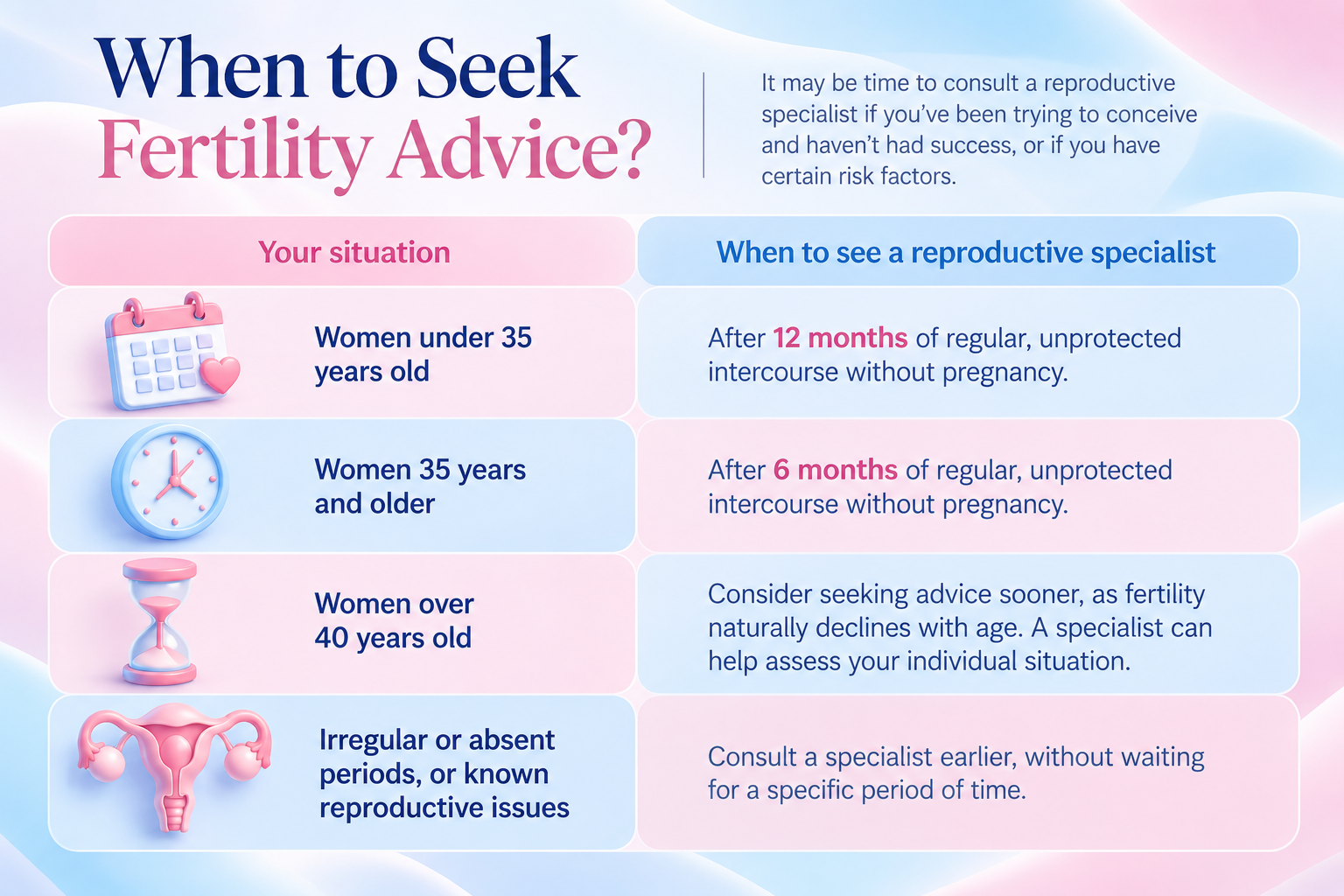
7. When to see a doctor
If you’re not getting pregnant, you don’t have to wait years before talking to a doctor.
When to start looking for answers depends on your age and health:
- Under 35: evaluation is generally recommended after 12 months of regular intercourse without contraception, if pregnancy hasn’t occurred.
- Age 35 and older: evaluation is recommended after six months of trying.
You should also see a doctor sooner if you have irregular or missed periods, known reproductive issues, past pelvic surgery, or anything else that could affect fertility.
What to do if pregnancy isn’t happening
If you’re not getting pregnant, it doesn’t mean you can’t become parents. Today’s reproductive medicine offers many options, from finding the cause of infertility to IVF programs.
Silk Medical in Georgia provides a variety of IVF programs tailored to your medical needs and personal situation. Options include IVF with ovarian stimulation or natural cycles, using donor eggs, sperm, or embryos, and cryopreservation.
If you need another option, the clinic also offers surrogacy programs.
If you’re planning to have a baby or are having trouble conceiving, contact Silk Medical. Our specialists can help find the cause and guide you toward parenthood.

 English