


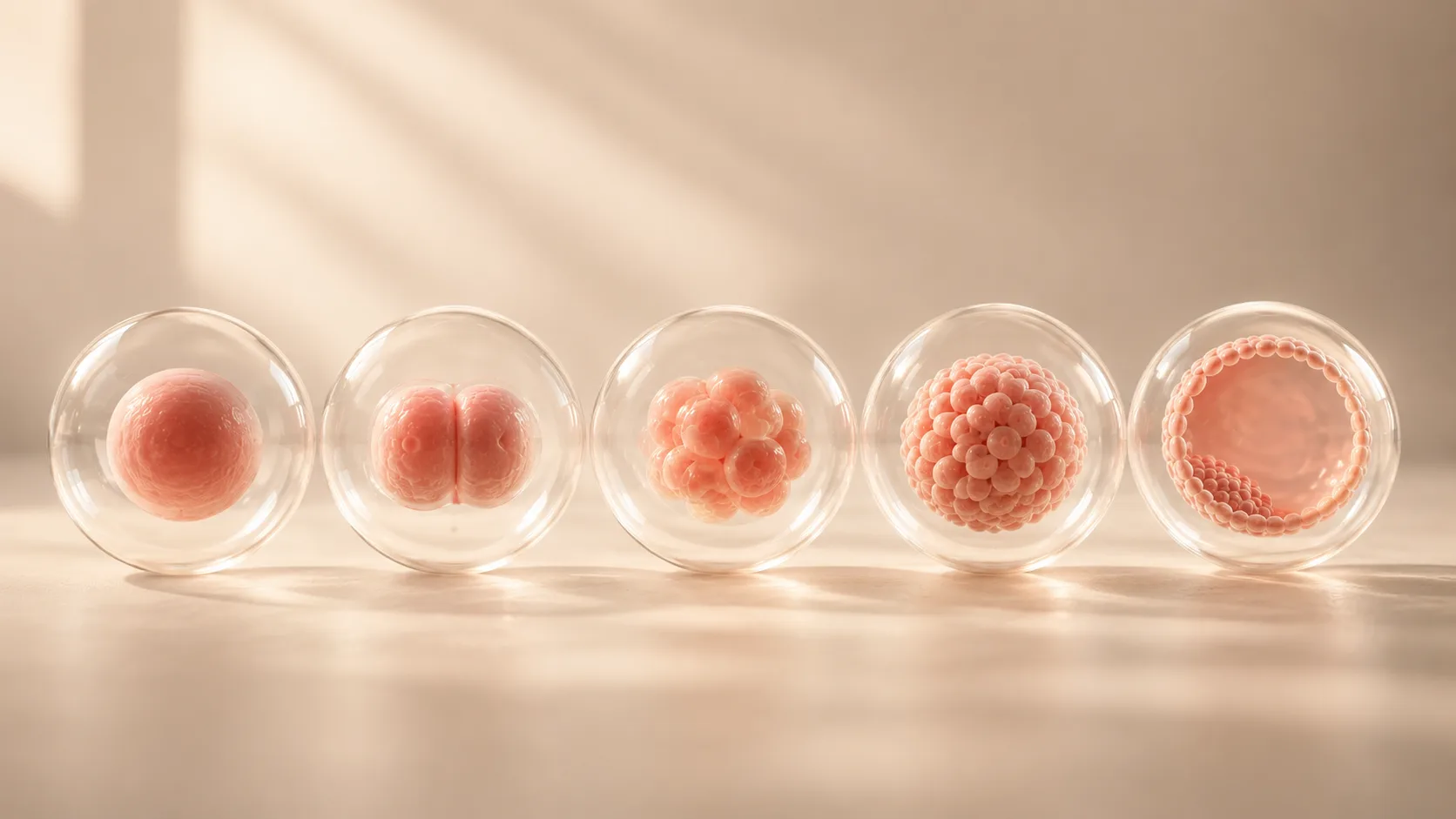
For patients, these days tend to drag. When will the first news arrive? What goes on in the gap between fertilization and transfer? Here is the embryo’s path, one day at a time.
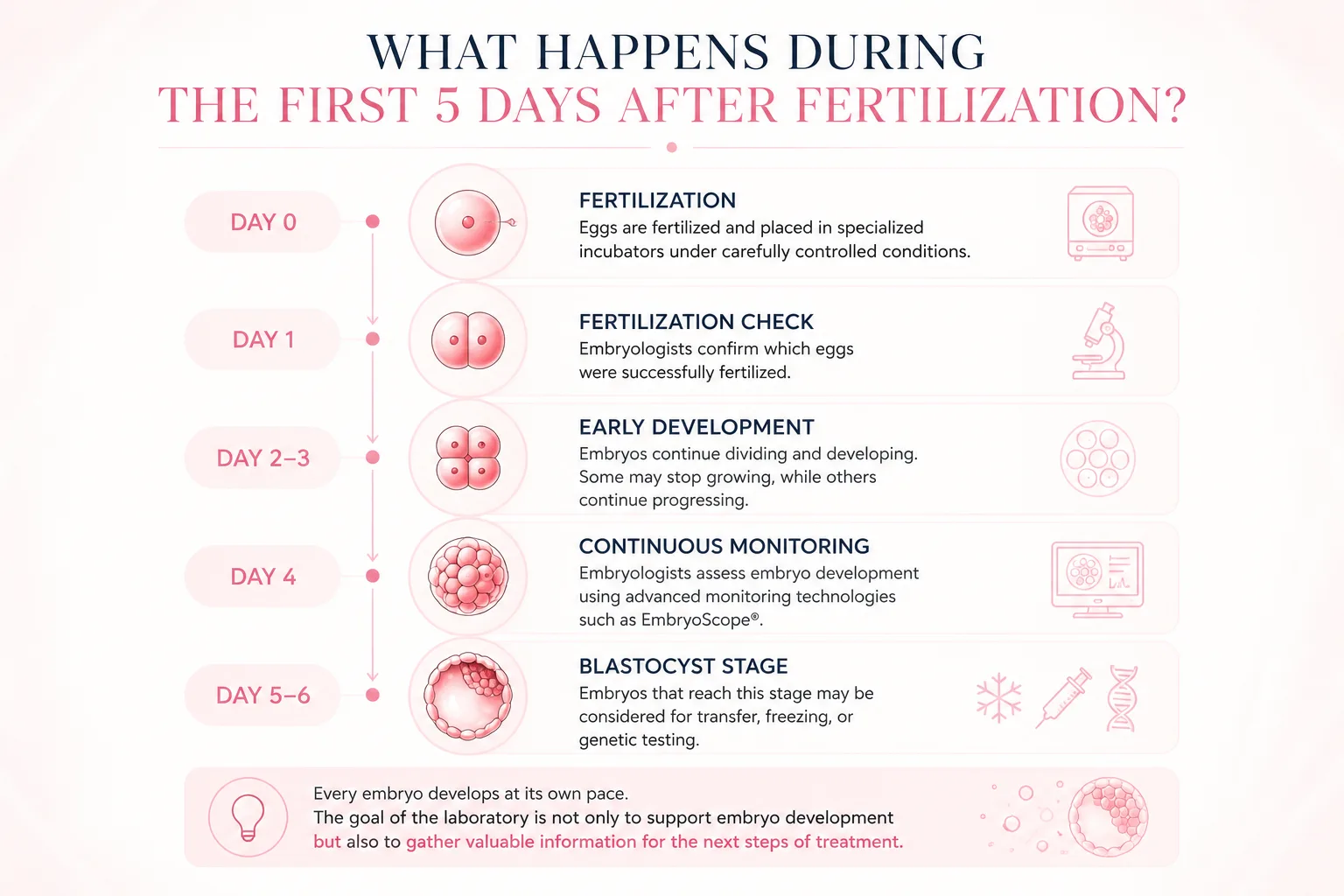
Day 0. Where It Starts
The eggs are collected, and the lab takes over. Fertilization happens that same day, and the future embryos go into specialized incubators built to imitate the body as faithfully as technology allows.
Conditions inside are kept on a short leash. Temperature, the makeup of the air, and a long list of finer settings are held exactly where an embryo needs them. Small drifts can change an outcome, so the lab runs to strict quality protocols rather than guesswork.
Day 1. The First Answers
The next morning, embryologists look at whether fertilization went the way it should.
This is usually the first real piece of news after the procedure. It tells you how many eggs fertilized and will keep developing.
Every step in the lab at SILK Medical runs through the IVFID Witness System. The system checks, on its own, that the eggs, sperm, and embryos all belong to the same patient. It is a second set of eyes that human hands cannot match, and it cuts the chance of a mix-up.
Days 2-3. The Embryos Carry On
Across the next couple of days, the embryos keep dividing and growing.
No two travel the road quite alike. Some keep a steady pace; others simply stop. Nothing about this is unusual. It happens in the best reproductive centers anywhere in the world, because biology sets the terms, not the clinic.
Through this stretch, embryologists look in on every embryo each day and note the shifts that might matter later in treatment.
Day 4. Still Watching
By now the team knows a good deal more about how things are going.
At SILK Medical the watching is done with the EmbryoScope® and its time-lapse imaging. Where older methods meant taking embryos out for a look, this one follows them almost continuously and never disturbs the incubator.
So the conditions stay even, and the picture of each embryo gets sharper at the same time.
Days 5-6. The Stage That Counts
By the fifth or sixth day, it is clear which embryos have gone the distance in the lab.
This is where physicians finally have enough to plan around. One embryo might be a candidate for transfer; another might be set aside for freezing or for genetic testing. For a lot of patients, no day since the retrieval feels as big, or as long-awaited, as this one.
Embryologists call this point the blastocyst stage. Reach it, and you can see which embryos are ready for whatever comes next in the program.
Why the Lab Itself Makes a Difference
Embryos grow inside the lab, full stop. That makes its equipment and its methods anything but a background detail in an IVF program.
SILK Medical leans on modern embryo culture techniques, the EmbryoScope®, and PGT-A genetic testing. The payoff is plainer information about how embryos are developing, and steadier footing for the calls made at each stage.
For anyone facing a low ovarian reserve, a string of failed attempts, or a stubborn form of infertility, what the lab can do may matter more than anything else.
What Happens After
Once a blastocyst forms, the patient and the specialists settle on the next move together.
Depending on the program, that embryo might be transferred in the same cycle, sent off for genetic testing, or frozen for later.
No two IVF programs are the same, so the decision always comes back to the patient’s own medical situation.
The Thing Worth Holding On To
For patients, these five days are mostly spent waiting on the phone to ring. But in that short window the embryos pass real milestones, and the lab gathers the kind of information that points the way forward in treatment.
More often than not, what these few days reveal becomes the ground the rest of the program is built on.
SILK Medical sees the full range of cases – first-time IVF, repeated failed attempts, low ovarian reserve, the harder forms of infertility. The plan is shaped to fit each family, their medical picture, and what they hope the program will achieve.
Because behind every embryo on the bench is a family, waiting on a child.

 English