



Embryo transfer is an important part of IVF, but not every attempt leads to pregnancy. Sometimes, the embryo does not attach to the uterine lining, so pregnancy does not happen.
Why does this happen? Could it be due to the embryo’s quality, the condition of the endometrium, or hormonal balance? And what steps should you take if the transfer did not result in pregnancy?
Let’s go over the main factors that can affect implantation and when you might want to talk to your reproductive specialist about more tests.
How does embryo implantation happen after IVF?
After the embryo is placed in the uterus, pregnancy does not start right away. The embryo needs some time to get ready to attach.
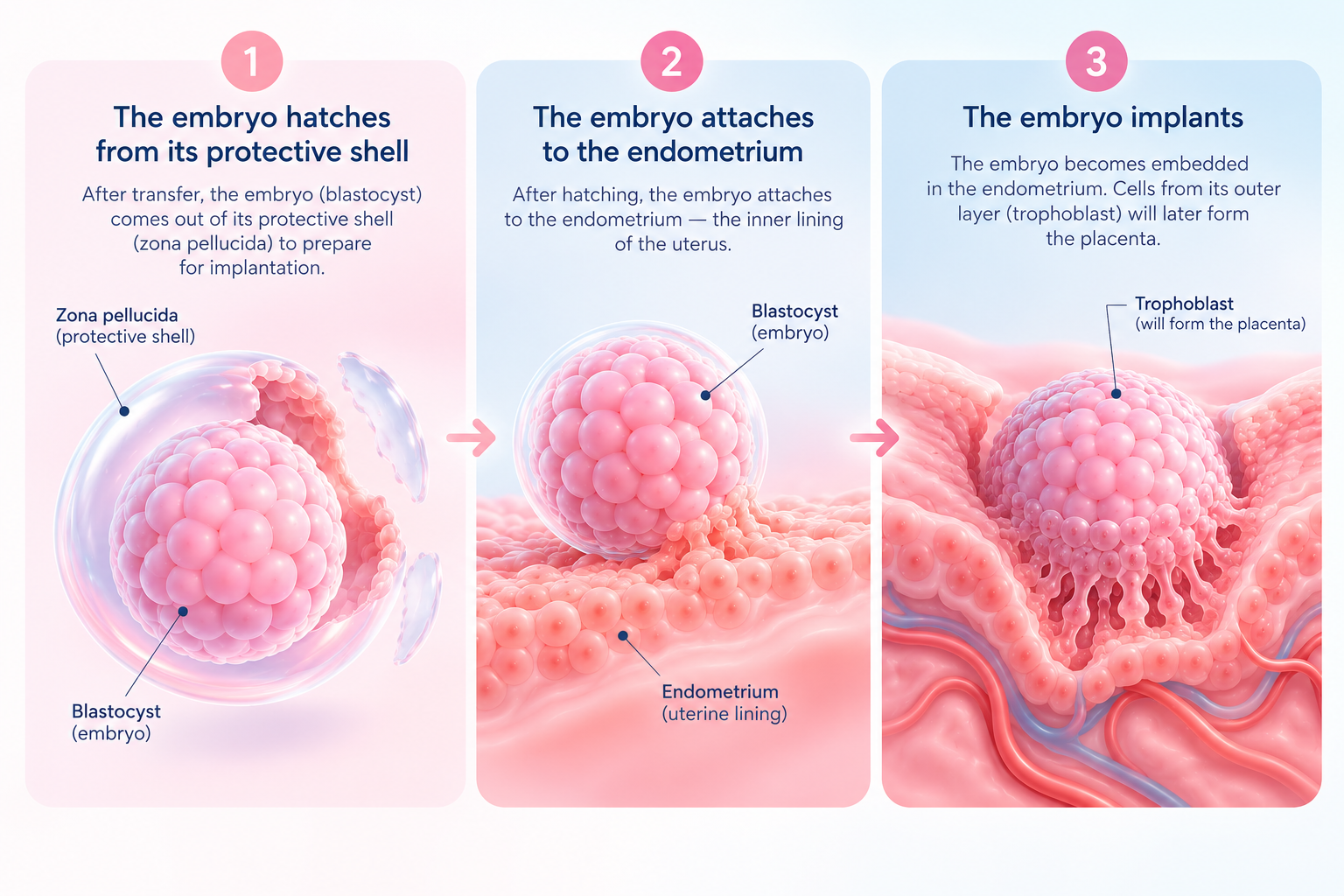
First, the embryo hatches from its thin protective shell. Then it attaches to the endometrium, which is the inner lining of the uterus, and slowly embeds itself into the tissue. This whole process is called implantation.
As the embryo embeds, its outer cells, called the trophoblast, form villi that help build the placenta. The placenta later provides oxygen and nutrients to the developing baby and removes waste products.
Two main things are needed for successful implantation: the embryo must keep developing, and the endometrium must be in good condition. Still, even if both are true, pregnancy does not always happen after every transfer.
Why might an embryo fail to implant?
1. Genetic features of the embryo
One reason an embryo might not implant is chromosomal abnormalities. These can happen very early in development and affect whether the embryo can attach and keep growing.
An embryo might look healthy in the lab, but that does not mean there are no chromosomal problems. The chance of these issues goes up as a woman gets older, especially if her own eggs are used.
Looking at the embryo’s shape and structure is important, but it cannot fully predict the outcome of the transfer. Preimplantation genetic testing (PGT), which is available at Silk Medical, can give more information about the embryo’s genetic health.
The clinic offers two types of tests: PGT-A NGS, which checks for changes in chromosome number, and PGT-M, which looks for certain hereditary diseases. The right test depends on your medical situation and your doctor’s advice. PGT gives extra information to help choose an embryo, but it cannot guarantee implantation or pregnancy.
2. Condition of the endometrium
The endometrium is the lining of the uterus where the embryo needs to attach. For implantation to happen, its condition, structure, and readiness at the right time in the cycle all matter.
Certain changes inside the uterine cavity can affect the chance of implantation, such as:
- endometrial polyps;
- intrauterine adhesions;
- some types of uterine fibroids, especially those that distort the uterine cavity;
- congenital features of uterine structure.
These conditions do not always stop pregnancy from happening. How much they matter depends on your individual case, so treatment decisions are made after a careful assessment.
3. Inflammatory processes and uterine conditions
Some conditions can affect the endometrium and the environment for implantation. For example, chronic endometritis, which is inflammation of the uterine lining, has been linked in several studies to repeated implantation failure.
When evaluating reproductive health, the doctor may also consider endometriosis and adenomyosis, particularly when embryo transfers have repeatedly failed to result in pregnancy.
However, having one of these conditions does not always mean implantation will fail. The need for more tests or treatment is decided on a case-by-case basis.
4. Hormonal balance and timing of the transfer
For implantation to work, the endometrium needs to be ready for the embryo. Several hormones, such as progesterone, play a role in this process.
If there is not enough hormonal support, or if the timing of the transfer does not match when the endometrium is ready, this can lower the chance of pregnancy.
That’s why, when getting ready for a transfer, your doctor considers the IVF protocol, your test results, and the details of your cycle. If needed, your preparation plan and hormonal support can be changed.
5. Features of embryo development
Even embryos that reach the blastocyst stage and look suitable for transfer in the lab can still vary in how well they keep developing.
The embryologist checks the embryo’s appearance and stage of development, but these features cannot fully predict if implantation and pregnancy will happen.
6. Technical aspects of the transfer
Embryo transfer usually goes smoothly, but sometimes the procedure can be technically difficult. For example, certain features of the cervix or cervical canal can make it harder.
A difficult transfer can lower the chance of pregnancy, so your doctor and embryologist will consider what happened in previous procedures and, if needed, plan ahead for the next transfer.
Why doesn’t the embryo implant when all tests are normal?
Even if all test results are normal and the embryologist rates the embryo highly, implantation might still not happen. This is because current tests cannot check every process needed for pregnancy.
For example, looking at the embryo’s shape and stage shows how it looks, but not its full potential to keep developing. Ultrasound can check the endometrium’s thickness and structure, but these alone cannot confirm that all the right conditions for implantation are present.
Also, implantation relies on a complex interaction between the embryo and the endometrium. Even if both look good in tests, it is still not possible to predict the outcome of the transfer with complete certainty.
So, not finding any abnormalities is a good sign, but it does not guarantee successful implantation. This shows how complex the process is, rather than pointing to a hidden problem or a mistake in testing.
What to do if the embryo did not implant
A failed transfer can be very upsetting, especially after a long period of preparation and hope. But remember, one failed transfer does not mean IVF will not work in the future. Not every attempt leads to pregnancy, and sometimes the reason is not clear.
If the first attempt did not lead to pregnancy, it does not mean you should stop treatment. To learn more about when to try again and what to consider before the next cycle, read our article “Didn’t Work the First Time? Is a Second Round of IVF Worth It?”.
After a negative result, talk with your reproductive specialist about the cycle and what to do next. Your doctor can review the embryo’s development, details of the transfer, the endometrium, and hormonal support, and decide if more tests are needed before trying again.
Not every patient needs extra tests after just one failed attempt. According to the European Society of Human Reproduction and Embryology (ESHRE) guidelines on recurrent implantation failure, further testing should be based on your individual situation. If transfers keep failing, your specialist may suggest a more detailed evaluation.
Each extra test or procedure should have a clear reason and be able to affect your treatment plan. Not every method offered after a failed IVF attempt has been proven to work.
Can you improve the chances of embryo implantation?
Implantation can never be fully guaranteed. Still, preparing for the transfer in a way that fits your needs can help find and, when possible, address factors that might lower your chance of pregnancy.
To do this, it is important to check the endometrium and uterine cavity, consider your age and reproductive history, choose the right preparation and hormonal support, and make sure the transfer is done under the best conditions.
Lifestyle also matters. Before an embryo transfer, it is recommended to:
- Eat a balanced diet with vegetables, fruit, protein sources, and a variety of other foods.
- Avoid smoking and alcohol, and refrain from using psychoactive substances.
- Keep a regular sleep schedule and try to reduce daily stress when you can.
- Maintain moderate physical activity, unless your doctor has advised limiting it.
- Keep chronic conditions under control and inform the reproductive specialist about any medications you take.
- Follow your doctor’s prescriptions and do not change the doses of hormonal or other medications on your own.
- Seek medical help promptly if you notice signs of infection or your well-being worsens.
After the transfer, keep taking your prescribed hormonal support and follow your clinic’s recommendations. If you have questions about sex, physical activity, or other restrictions, talk to your reproductive specialist ahead of time. Blanket bans do not fit every patient, and strict bed rest after transfer is usually not needed.
It is also important to avoid unnecessary procedures. Extra immunological tests and treatments should not be given to every patient after a failed transfer, since many of these methods do not have strong evidence that they work.
For more on measures that genuinely help improve the chances of pregnancy, read our article “How to Improve Your Chances of Pregnancy: What Actually Works”.
The most important thing is not to try to control every part of daily life in hopes of guaranteeing a result. Even if you follow all the recommendations, implantation may still not happen, and that does not mean you did anything wrong.
Key takeaways
A failed transfer is not a reason to blame yourself or give up on your dream of becoming a parent. Even if a past IVF attempt did not lead to pregnancy, it does not mean the next stage of treatment will not work.
At Silk Medical, we know how important the journey to having a child is for every family. That’s why we use an individual approach to treatment, considering your history, test results, reproductive health, and your doctor’s advice.
If a previous transfer did not result in pregnancy, a Silk Medical reproductive specialist can help you understand the cycle, decide if more tests are needed, and talk about your options for next steps.
Our goal is to do everything we can to help you get closer to what matters most—becoming parents and one day hearing the word “mama.” We will be with you on this journey, offering professional care and paying close attention to your story.

 English